Inattentive ADHD involves persistent difficulties with attention, organization, and follow-through. Hyperactive-impulsive ADHD involves excessive activity, restlessness, and difficulty controlling impulses. Combined ADHD meets the symptom requirements for both groups.
These patterns are called presentations because symptoms can change with age and circumstances. Each describes how the same condition appears at a particular point in time.
Comparing the presentations during the same activity can help you describe what’s difficult and what to discuss during ADHD testing in Florida.
How inattentive vs. hyperactive-impulsive ADHD symptoms can show up in the same task
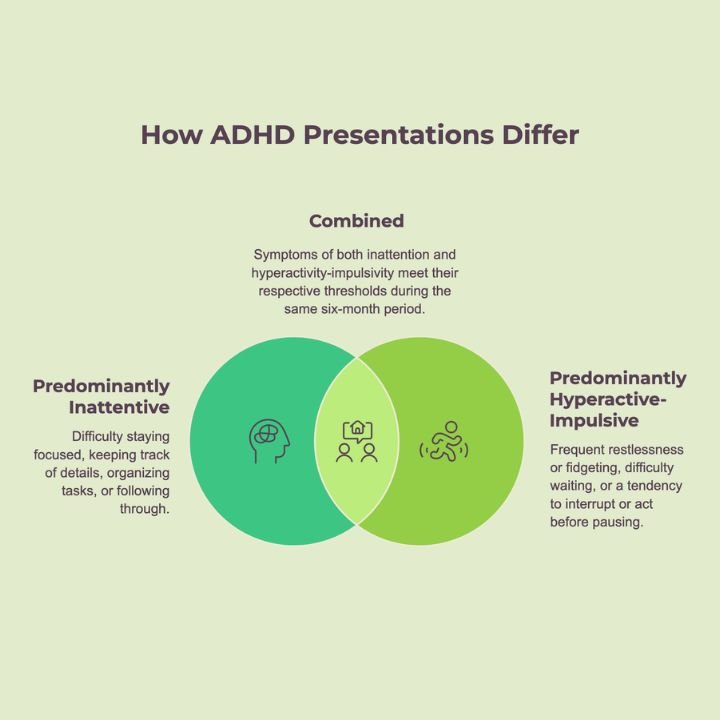
Let’s use household chores as a simple example of how these differences can appear.
“Predominantly” identifies the symptom group that meets the diagnostic threshold. Some symptoms from the other group can still occur below that threshold.
Tracking task steps with predominantly inattentive ADHD
Someone could start loading the dishwasher, become distracted, and leave it half-finished. They could also forget a requested chore or lose track of where they put the cleaning supplies. The difficulty involves staying with the task and remembering what remains.
Waiting your turn with predominantly hyperactive-impulsive ADHD
While dividing chores, someone could repeatedly interrupt before the other person finishes speaking or take over a task without waiting for their turn. They could remember the plan but struggle to pause before acting.
During a seated discussion about the chores, they might fidget or feel an urge to get up.
Can you have both inattentive and hyperactive ADHD?
Yes. Combined presentation requires meeting the symptom threshold in both groups during the same six-month period, along with the other diagnostic criteria. Someone could leave the dishwasher half-loaded and repeatedly interrupt while chores are being divided. CHADD’s explanation of ADHD presentations describes the two symptom groups.
How ADHD symptoms can change from adolescence to adulthood

Visible hyperactivity can become less pronounced with age, while restlessness, impulsivity, or organizational difficulties may continue. Someone who repeatedly left their seat as a child could feel restless during meetings as an adult.
The National Institute of Mental Health’s ADHD overview explains that some people manage earlier demands but struggle when adult responsibilities increase. Difficulty organizing school assignments could later appear as missed bills or unfinished work tasks.
A teenager may rely on a parent to organize materials or remind them about deadlines. At college or work, those reminders may disappear while the person must manage several responsibilities independently. Describe that change in support as well as any change in symptoms.
During an evaluation, describe earlier difficulties alongside current examples. Note which reminders, routines, or support help you manage them.
How clinicians identify an ADHD presentation

Clinicians assess symptoms in each group, review their history and impact across settings, and consider other explanations. No single test diagnoses ADHD.
An evaluation may include a clinical interview, standardized symptom questionnaires, and information from people who know you in different settings, with your permission. The clinician interprets these sources alongside your developmental and medical history.
Count symptoms in each group separately
Age determines the symptom threshold. The American Academy of Pediatrics’ diagnostic criteria describe how clinicians assess the two groups. Combined presentation requires meeting the threshold in both groups.
| Age | Predominantly inattentive | Predominantly hyperactive-impulsive | Combined |
|---|---|---|---|
| 16 and younger | 6+ inattentive symptoms; fewer than 6 hyperactive-impulsive symptoms | 6+ hyperactive-impulsive symptoms; fewer than 6 inattentive symptoms | 6+ symptoms in each group |
| 17 and older | 5+ inattentive symptoms; fewer than 5 hyperactive-impulsive symptoms | 5+ hyperactive-impulsive symptoms; fewer than 5 inattentive symptoms | 5+ symptoms in each group |
These counts describe the symptom pattern over the past six months. A diagnosis also requires the other criteria discussed below.
For example, an adult with six inattentive symptoms and three hyperactive-impulsive symptoms meets the symptom-count threshold for inattention, but not for combined presentation. A diagnosis still requires the other criteria, including symptom duration and impact on daily functioning.
Several missed bills may illustrate the same symptom of forgetfulness. Clinicians count the distinct diagnostic symptoms that meet the criteria, using repeated examples to establish frequency and impact.
Check when symptoms began, where they occur, and how they affect daily life
Several symptoms must have been present before age 12. Clinicians also confirm that symptoms have persisted for at least six months, that several occur in two or more settings, and that they interfere with social, school, or work functioning. Symptoms must also be inconsistent with the person’s developmental level.
An adult evaluation can establish this history even if ADHD wasn’t diagnosed during childhood.
Bring examples from home, school, or work, along with available report cards or earlier evaluations. These details help establish when difficulties began and what they affect now.
Record what happened, how often, where it occurred, and the consequence. “I missed three deadlines despite calendar reminders” tells the evaluator more than “I’m bad at focusing.” Include strategies that help as well as situations in which difficulties remain.
Evaluate other explanations and co-occurring conditions
Clinicians assess sleep problems, anxiety, depression, and learning disabilities that could explain similar difficulties or occur alongside ADHD.
Unfinished written work, for example, could reflect attention difficulties, a learning disability, or both. The distinction helps guide the recommendations.
Book a free consultation about ADHD testing in Florida
You can bring concerns about missed steps, restlessness, or interruptions without deciding which presentation fits beforehand. The useful question is what explains the pattern and which supports address its effect on your life.
Verdant Psychology provides psychologist-led ADHD testing with written findings and practical recommendations for treatment, school, or work.
Book a free consultation to discuss your concerns, evaluation options, and estimated cost.
FAQs about ADHD presentations
Is ADD the same as inattentive ADHD?
ADD (Attention Deficit Disorder) is an older term still used informally for attention difficulties without prominent hyperactivity. The current diagnostic term is ADHD, predominantly inattentive presentation. An evaluation checks the full symptom pattern rather than relying on the older label.
Can you be quiet and still have ADHD?
Yes. Being quiet doesn’t rule out persistent forgetfulness, distractibility, or organizational difficulties. A clinician assesses symptoms and their effect across daily activities, rather than judging ADHD by how much someone talks or moves.
Does combined ADHD mean more severe ADHD?
No. Presentation describes which symptom groups meet the diagnostic threshold. Severity describes the extent of symptoms and impairment. Someone with predominantly inattentive ADHD can still experience substantial difficulties.
Can you have ADHD and autism at the same time?
Yes. ADHD and autism can co-occur. An assessment considers the criteria for each, including developmental history and overlapping concerns. Verdant’s psychological evaluation services address both conditions.
What if I don’t have childhood records for ADHD testing?
Tell the evaluator which records are unavailable. They can discuss childhood experiences and, with your permission, seek other information. Missing records don’t automatically prevent an evaluation, but evidence of several symptoms before age 12 is still needed.