Is It Depression (Or ADHD Fatigue?)
Mental exhaustion, brain fog, and low motivation can make daily tasks feel unusually difficult. These symptoms are often linked to either depression or ADHD fatigue, two conditions that can appear similar on the surface.
The challenge is that both affect energy, focus, and the ability to start or complete tasks. When these experiences persist, it can become difficult to tell if the cause is mood-related or connected to executive functioning demands.
At Verdant Psychology, evaluations of attention, mood, and cognitive functioning help determine if symptoms reflect ADHD fatigue, depression, or both.
Knowing the difference between ADHD fatigue vs depression helps clarify why these patterns occur and what type of support may be helpful.
Common signs of ADHD fatigue

Common signs of ADHD fatigue include mental exhaustion, brain fog, difficulty sustaining focus, low motivation for routine tasks, and feeling overwhelmed after prolonged concentration.
These symptoms often appear after extended effort to manage attention, organization, and daily responsibilities. The following describes common ways ADHD fatigue can appear in daily life:
Boom-and-bust exhaustion: Periods of intense focus are followed by sudden mental and physical exhaustion. After completing demanding tasks, energy may drop sharply, making it difficult to continue working or stay productive.
Brain fog after overload: Thinking may feel slow or disorganized, making decisions and simple choices harder than usual, especially after long periods of concentration.
Low motivation for routine tasks: Activities that feel repetitive or uninteresting may be difficult to start or finish, even when motivation exists for more stimulating tasks.
Irritability from sensory overload: Busy environments, noise, or bright lights may increase frustration and mental fatigue, making it harder to stay calm or focused.
Sleep disruption: Racing thoughts or difficulty settling the mind can interfere with sleep, even when someone feels physically tired.
Masking fatigue: Effort spent appearing organized, focused, or socially engaged can lead to exhaustion after work or social interactions.
Physical tension: Headaches, muscle tension, or general physical discomfort may appear during periods of prolonged mental strain.
Emotional numbness or feeling “stuck”: A person may want to start tasks but feel mentally unable to begin, even when the task feels important.
Common signs of depression

Depression includes persistent low mood, low energy, loss of interest in activities, and difficulty concentrating. These symptoms typically affect daily functioning and remain present for extended periods rather than appearing only during stressful or demanding situations.
People experiencing depression may notice patterns such as:
Persistent low energy: Fatigue may continue even after rest or sleep. Everyday activities such as getting out of bed, starting tasks, or maintaining energy throughout the day can feel unusually difficult.
Ongoing sadness or emotional emptiness: A lasting sense of low mood, heaviness, or emotional numbness may be present most days, sometimes without a clear reason.
Loss of interest in enjoyable activities: Activities that once felt rewarding, such as hobbies, socializing, or personal interests, may feel less engaging or no longer bring the same sense of enjoyment.
Feelings of hopelessness or guilt: Persistent negative thoughts about oneself may appear, including feelings of worthlessness, excessive guilt, or believing that situations will not improve.
Changes in appetite: Eating patterns may shift noticeably, with some people eating much more than usual while others experience reduced appetite and unintended weight changes.
Physical discomfort: Depression can sometimes appear through physical symptoms such as headaches, muscle aches, fatigue, or digestive problems without a clear medical cause.
Social withdrawal: People may begin avoiding conversations, gatherings, or activities with others because interaction feels overwhelming or draining.
Difficulty concentrating: Mental focus may feel slower or less clear, making it harder to follow conversations, process information, or complete everyday responsibilities.
Overlap of ADHD fatigue and depression

ADHD fatigue and depression overlap because both conditions can cause low energy, reduced motivation, brain fog, sleep disruption, and difficulty concentrating.
Several symptoms can appear in both ADHD fatigue and depression:
Exhaustion and brain fog make thinking clearly or staying mentally organized harder.
Difficulty starting tasks or maintaining motivation throughout the day.
Increased irritability or withdrawal from social activities.
Changes in sleep patterns, such as insomnia or oversleeping.
Lower self-confidence develops after repeated struggles with focus, productivity, or mood.
Because these symptoms overlap, ADHD fatigue may sometimes be mistaken for depression. In some situations, both conditions may also occur together, which can make symptoms more complex and require careful evaluation.
Key differences between ADHD burnout and depression
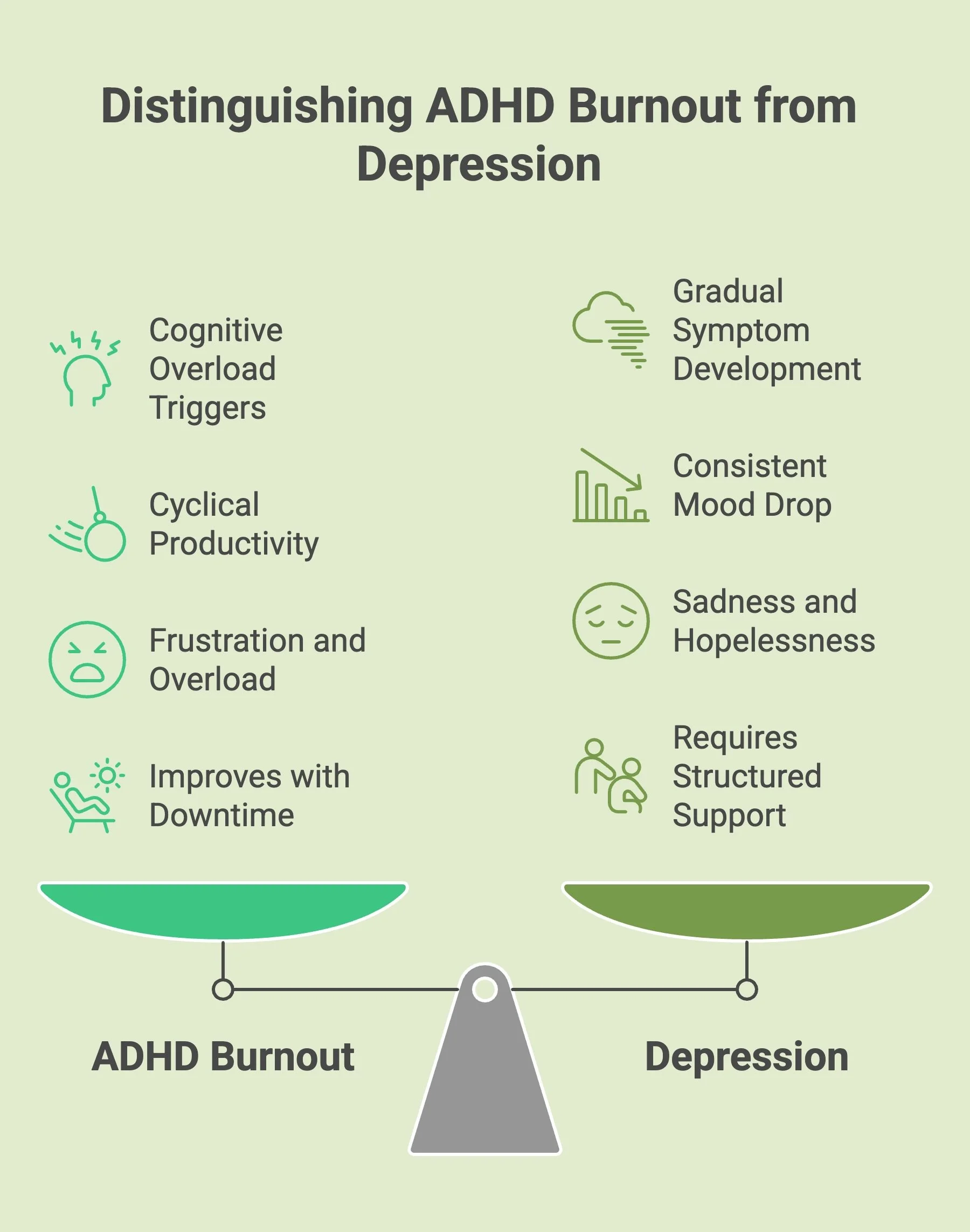
The difference between ADHD burnout and depression is that ADHD burnout usually develops after periods of cognitive overload, while depression involves a more persistent change in mood and energy that is not tied to specific demands.
These differences are easier to see when looking at several aspects:
Triggers
ADHD burnout often develops after prolonged effort to manage attention, organization, or social expectations. Periods of hyperfocus, heavy workloads, or constant self-regulation can lead to sudden exhaustion.
Depression does not always have a clear trigger. Symptoms may appear gradually and persist regardless of workload or daily demands.
Patterns
ADHD burnout typically follows a cycle of intense productivity followed by exhaustion. Energy may temporarily return after rest, reduced demands, or engaging in activities.
Depression tends to involve a more consistent drop in mood and energy. Fatigue and low motivation often remain present even after sleep or time away from work.
Emotional experience
ADHD burnout is often associated with frustration, mental overload, and feeling stuck when trying to start or complete tasks.
Depression more commonly involves persistent sadness, hopelessness, or feelings of worthlessness that affect emotional outlook.
Response to rest
ADHD burnout may improve with downtime, fewer responsibilities, or changes in stimulation and routine.
Depression typically does not resolve through rest alone and often requires structured support such as therapy, lifestyle changes, or medical treatment.
Can untreated ADHD cause depression?

Untreated ADHD can increase the risk of depression over time. Ongoing challenges with attention, organization, and self-regulation can create repeated stress in school, work, and daily responsibilities.
When these difficulties continue without support, they can gradually affect confidence, motivation, and emotional well-being.
Research suggests that individuals with ADHD experience higher rates of fatigue, burnout, and depressive symptoms compared with the general population.
The constant effort required to manage focus, responsibilities, and expectations can lead to mental exhaustion and discouragement, which may contribute to the development of depression.
Addressing ADHD through evaluation, treatment, and structured support can often improve both attention-related difficulties and mood. When ADHD symptoms are better managed, many individuals also experience improvements in energy, motivation, and overall emotional functioning.
Get answers with Verdant Psychology
ADHD fatigue vs depression can appear similar because both affect energy, focus, and motivation. However, ADHD fatigue often develops after prolonged mental effort, while depression involves more persistent changes in mood and emotional well-being.
A clearer understanding of these differences can help you better understand what you may be experiencing. If you would like clearer insight into what you may be experiencing, book a free consultation today.
Frequently asked questions
How can you tell the difference between ADHD fatigue and depression?
ADHD fatigue usually appears after mental overload and often improves with rest or engaging activities. Depression involves persistent low mood and low energy that do not improve with breaks.
Can adhd fatigue feel like depression?
Yes. Both ADHD fatigue and depression can involve exhaustion, brain fog, low motivation, and difficulty concentrating. ADHD fatigue usually follows prolonged mental effort, while depression involves persistent mood changes.
Does ADHD burnout go away with rest?
ADHD burnout may improve with rest or reduced demands. However, burnout often returns if underlying ADHD symptoms remain unmanaged.
Can ADHD and depression occur at the same time?
Yes. ADHD and depression commonly occur together. Ongoing attention difficulties can create stress in school, work, or relationships, increasing the risk of depression. A comprehensive evaluation can help identify both conditions and guide appropriate support.
When should someone seek an evaluation for ADHD or depression?
An evaluation may help when fatigue, low motivation, brain fog, or mood changes begin interfering with daily functioning.