List of Learning Disorders and How They Differ
Struggling with reading, math, or writing despite strong effort can be confusing and discouraging.
When these difficulties persist, they often reflect differences in how the brain processes language, numbers, or written expression rather than a lack of intelligence or motivation.
This list of learning disorders explains the most common types identified in our psychological evaluations, along with related conditions that can appear alongside them. Recognizing these patterns helps families, educators, and adults identify when evaluation may be helpful.
What are the common types of learning disorders?
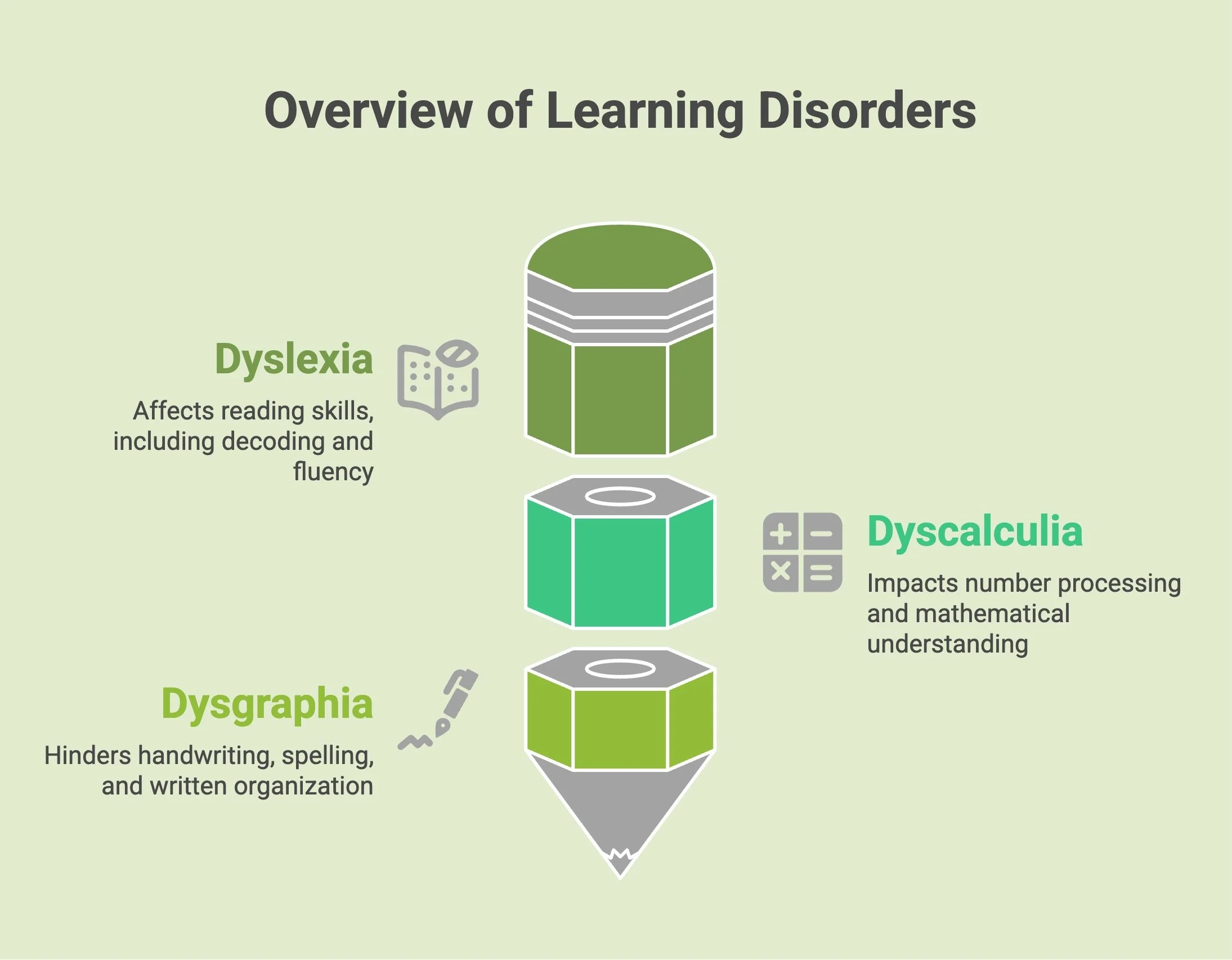
The main types of learning disorders are dyslexia, dyscalculia, and dysgraphia, which affect reading, mathematics, and written expression.
In the Diagnostic and Statistical Manual of Mental Disorders, Fifth Edition (DSM-5), these conditions fall under Specific Learning Disorder (SLD) and involve persistent academic difficulties despite normal intelligence and appropriate instruction.
Dyslexia (reading disorder)
Dyslexia is a learning disorder that affects word decoding, phonological processing, and reading fluency. Individuals may read slowly, confuse letters such as “b” and “d,” or skip short words when reading aloud. Dyslexia is fairly common and affects roughly 1 in 14 people worldwide, making it one of the most common learning disorders.
Dyscalculia (math disorder)
Dyscalculia is a learning disorder that affects how the brain processes numbers and mathematical relationships. Individuals may struggle to remember basic math facts, estimate quantities, or understand how numbers relate to each other.
Tasks like solving equations, managing numbers, or following multi-step calculations can feel confusing or slow.
Dysgraphia (written expression disorder)
Dysgraphia is a learning disorder that affects handwriting, spelling, and written organization. Writing may appear messy, slow, or difficult to structure, even when someone understands the material well.
Individuals may struggle to form letters clearly, spell consistently, or translate ideas into written sentences.
What is the difference between a learning disability and a learning disorder?

Learning disorder is the clinical diagnosis used by psychologists, while learning disability is the broader term often used in education and law.
Learning disorder (clinical term)
A learning disorder is a diagnosis made by a qualified professional, such as a psychologist, after a formal evaluation. Clinicians use this term when testing shows ongoing difficulty with certain learning skills despite typical intelligence and appropriate instruction.
Learning disability (educational and legal term)
A learning disability is the term schools often use when identifying students who qualify for academic support services. When a student is identified with a learning disability, they may receive accommodations such as an Individualized Education Program (IEP) or other learning supports.
What are early signs of learning disorders in kids?

Early signs of learning disorders in kids include persistent difficulty with language, numbers, writing, or other school-related skills compared with children of the same age.
Preschool Signs (Ages 3–5)
Early signs in preschool years may include:
Delayed speech or difficulty learning new words
Trouble with rhyming games or nursery rhymes
Difficulty recognizing letters, numbers, colors, or shapes
Poor fine motor skills, such as holding crayons or using scissors
Trouble following simple directions or routines
Early elementary signs (ages 5–9)
Learning differences often become more noticeable once formal instruction begins. Children may struggle to connect letters with sounds when learning to read, read slowly, or reverse letters such as b and d.
Frequent spelling mistakes, messy handwriting, and difficulty learning basic math facts or telling time may also appear. Homework may take much longer than expected.
Later elementary and middle school signs (ages 10–13)
Signs that may appear as schoolwork becomes more complex include:
Difficulty with reading comprehension or understanding longer texts
Trouble completing written assignments or organizing ideas in writing
Difficulty solving math word problems
Disorganized schoolwork or frequently losing assignments
Trouble focusing, planning, or completing multi-step tasks
Avoiding homework, reading, or writing tasks because they feel difficult
Emotional and behavioral signs
Emotional or behavioral signs may include:
Frequent frustration during homework
Anxiety about school tasks
Avoiding certain subjects or assignments
Difficulty remembering instructions or sequences
Can adults have undiagnosed learning disorders?

Yes, many adults have learning disorders that were never identified during childhood. In the past, some learning differences were overlooked or misunderstood, and people were often labeled as lazy, careless, or unmotivated instead of receiving proper evaluation.
Signs in adulthood can look similar to childhood patterns. Someone with dyslexia may reread emails multiple times or struggle to process written information quickly.
Dyscalculia may appear as avoiding budgeting, calculations, or number-heavy tasks. Dysgraphia may show up as needing extra time to write reports or organize ideas in writing.
A psychological evaluation can compare cognitive ability with academic skills to identify these patterns and determine whether a learning disorder may explain the long-standing difficulties.
What are related or co-occurring conditions with learning disorders?

Related or co-occurring conditions with learning disorders are additional challenges that can occur alongside learning difficulties. These may include NVLD, dyspraxia, auditory processing disorder, visual processing difficulties, or anxiety and depression.
Non-verbal learning disorder and learning disorders
Nonverbal Learning Disorder (NVLD) affects how a person understands visual information, space, and social cues. People with NVLD often have strong speaking and vocabulary skills but struggle with tasks like reading maps, interpreting facial expressions, or organizing visual information.
Developmental coordination disorder and learning disorders
Developmental Coordination Disorder, sometimes called dyspraxia, affects movement and coordination. Individuals may find tasks like handwriting, buttoning clothes, catching a ball, or using tools unusually difficult because the brain has trouble planning and coordinating movements.
Auditory processing disorder and learning disorders
Auditory Processing Disorder (APD) affects how the brain makes sense of spoken sounds. Even though hearing is normal, people may struggle to follow instructions, especially in noisy environments, or may need information repeated to fully understand it.
Visual processing difficulties and learning disorders
Visual processing difficulties affect how the brain interprets what the eyes see. Individuals may struggle with tasks like copying notes from a board, lining up numbers in math problems, or coordinating hand and eye movements.
Mental health conditions and learning disorders
Anxiety and depression often occur alongside learning disorders. Repeated struggles with schoolwork or feeling behind peers can gradually affect confidence, motivation, and emotional well-being if the learning differences are not identified and supported.
Get answers with Verdant Psychology
This list of learning disorders shows that learning challenges such as dyslexia, dyscalculia, and dysgraphia are not about intelligence or effort. They reflect differences in how the brain processes language, numbers, and written information.
When these learning patterns are identified clearly, students and adults can receive the right strategies, accommodations, and supports to improve how they learn and work over time.
A comprehensive evaluation can clarify the learning profile behind ongoing difficulties and provide practical recommendations for support. To discuss concerns or next steps, you can schedule a free consultation with us today.
Frequently asked questions
What are some learning disabilities?
Learning disabilities include dyslexia, dyscalculia, and dysgraphia. These conditions are among the most recognized learning disorders and affect how the brain processes reading, numbers, or written expression.
What are the different types of learning disorders?
The different types of learning disorders most often identified in evaluations are dyslexia, dyscalculia, and dysgraphia. Each learning disorder affects a specific skill area, such as reading, mathematics, or writing.
How is a learning disability diagnosed?
A learning disability is diagnosed through a psychological evaluation that compares cognitive ability with academic skills. Testing helps identify specific learning disorders when there are clear gaps in areas like reading, writing, or math.
Are learning disorders related to adhd?
Learning disorders and ADHD are separate conditions but can occur together. ADHD affects attention and executive functioning, while a learning disability affects specific learning skills such as reading, writing, or math.
Can adults have learning disorders?
Yes, adults can have learning disorders that were never identified during childhood. Many adults only discover a learning disability later in life when long-standing learning challenges are evaluated through psychological testing.