9 Signs of ADHD in Children Beyond Hyperactivity
Signs of ADHD in children go beyond hyperactivity, as they can show up as forgetfulness, trouble following instructions, poor organization, and difficulty sustaining attention. Children who appear calm can still struggle with schoolwork and daily responsibilities.
Use these examples to document recurring difficulties and discuss an ADHD evaluation with a healthcare professional.
ADHD symptoms in children checklist
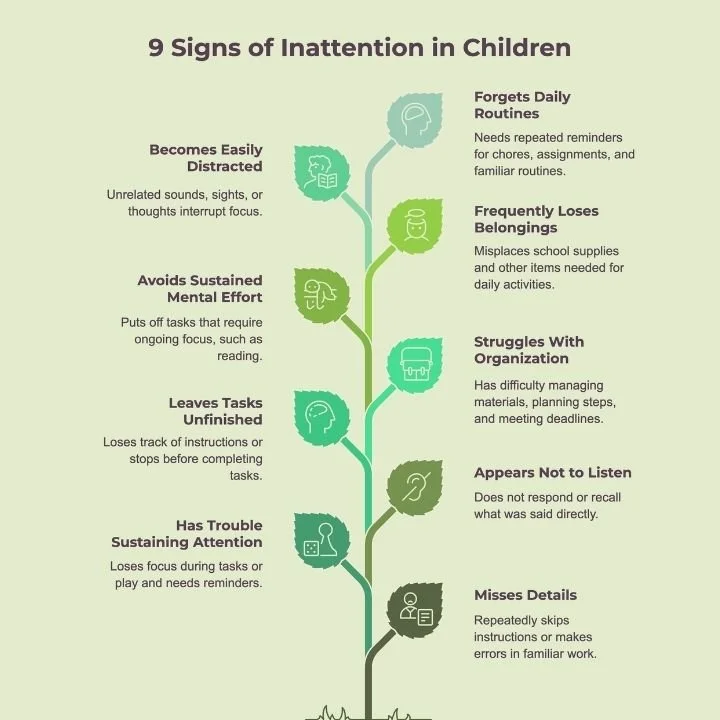
This checklist covers the nine inattention symptoms associated with ADHD, with examples from home and school. It does not cover every ADHD symptom or diagnose the condition.
ADHD symptoms in boys and girls can include inattention, hyperactivity, and impulsivity. Consider each child’s difficulties rather than assuming a particular symptom pattern.
1. Overlooks details and makes repeated mistakes
A child may understand a math problem but repeatedly miss a negative sign, copy numbers incorrectly, or skip part of the instructions. What makes this sign stand out is repetition. Similar errors keep appearing despite the child knowing how to complete the work.
2. Struggles to sustain attention during tasks or play
The child starts a worksheet, drifts away after a few minutes, and returns only after a reminder. The same drift can appear during play, such as a board game abandoned before the end. Note the task, distractions, and reminders needed to return to it.
3. Appears not to listen when spoken to directly
The child looks toward you but does not respond and cannot repeat what you said when asked. Ask your child to repeat the instruction in their own words.
4. Loses track of instructions and leaves tasks unfinished
A three-step instruction becomes one step, and the child starts a task, then moves on before finishing. A clinician considers difficulty understanding instructions and other explanations before attributing unfinished tasks to ADHD.
5. Struggles to organize tasks, materials, and time
The backpack holds crumpled papers, and projects start the night before they are due because the child cannot break the work into steps. Watch for deadlines missed across several weeks, even with reminders.
6. Avoids tasks requiring sustained mental effort
Homework stretches for hours with frequent breaks, or the child puts off reading and writing tasks. A child may understand the work but still struggle to begin or sustain the effort it requires.
7. Frequently loses belongings needed for daily activities
Keys, shoes, lunch boxes, and school materials go missing repeatedly. Notice how often essential items go missing and how this disrupts school or home routines.
8. Becomes distracted by unrelated sights, sounds, or thoughts
A noise in the hallway pulls attention away mid-lesson, or a thought unrelated to the task takes over. Note what pulled the child away, since the pattern across several moments matters more than any single one.
9. Forgets chores, assignments, and daily routines
Brushing teeth or packing the school bag needs repeated reminders, even when the routine is well established. Log how many reminders each routine needs per day, since that count helps show the pattern to a clinician.
When attention difficulties warrant an ADHD evaluation

Talk with a healthcare professional when attention difficulties interfere with school, friendships, or daily routines. You don’t need to wait six months to ask for help.
For an inattentive ADHD presentation, children through age 16 must have at least six inattention symptoms lasting at least six months. Clinicians also assess developmental expectations, symptoms across at least two settings, several symptoms present before age 12, and interference with daily functioning. The symptom threshold drops to five at age 17.
Anxiety, depression, and sleep problems can produce signs that look like ADHD. Autism and ADHD can also share traits, such as trouble with attention and routines. A thorough ADHD diagnosis considers other explanations and conditions that can occur alongside ADHD. Your child’s healthcare provider may also check hearing, vision, and other medical concerns.
What to document before your child’s ADHD evaluation

Before an ADHD evaluation, record specific examples of your child’s behavior, when difficulties occur, and how they affect everyday activities. These details give the evaluator more context than a general description such as “my child gets distracted.”
| What to document | Example |
|---|---|
| Attention difficulties | Needed four reminders to finish a 20-minute homework assignment |
| School performance | Completed classwork but forgot to submit it three times this week |
| Daily routines | Regularly forgets the second step of the morning routine |
| Behavior across settings | Similar attention concerns reported by a teacher and parent |
| Supports already tried | Written instructions helped, but verbal reminders alone did not |
Ask your child’s teacher for examples of what happens in class, especially during independent work, transitions, and longer assignments.
Note when the difficulties began, including any changes following a move, illness, or other major event.
Bring report cards, teacher comments, previous assessments, and notes about sleep, medical history, and developmental milestones. These records can help the evaluator understand your child’s difficulties over time.
Book an ADHD testing consultation in Florida
When the behaviors you’ve documented affect your child’s daily life, a professional assessment can identify what is contributing to them and which supports fit your child’s needs.
Verdant Psychology provides psychologist-led ADHD testing that examines inattentive and hyperactive symptoms, along with learning and emotional health. Families receive written findings and practical recommendations.
Online testing is available throughout Florida and eligible PSYPACT states. Book a Free Consultation to discuss your child’s age, concerns, and evaluation options.
FAQs about signs of ADHD in children
At what age can ADHD signs become noticeable?
ADHD signs can become noticeable during preschool. Several symptoms must have been present before age 12, but diagnosis can happen later. Signs usually become clearer as classroom demands grow. Clinicians account for age, since attention spans and organization change with development.
Can a child focus on video games and still have ADHD?
Yes. A child can focus hard on video games and still struggle with less engaging tasks. Focusing on a favorite activity does not rule out ADHD. Clinicians assess persistent symptoms and their impact across settings.
Can anxiety or sleep problems resemble ADHD?
Yes. Anxiety and sleep problems can cause distractibility, forgetfulness, and restlessness, and they can occur alongside ADHD. An evaluation considers sleep, emotional health, and developmental history to understand what is contributing to the symptoms.
Can an ADHD symptoms checklist diagnose my child?
No. A checklist can flag behaviors worth raising with a professional, but only a clinical evaluation can diagnose ADHD. The evaluation compares symptoms across settings, considers developmental expectations, and assesses other conditions that could explain or contribute to the difficulties. Clinicians also use standardized rating scales and interviews.
How can I support my child while awaiting an evaluation?
Give one or two instructions at a time, keep routines predictable, and use visual reminders for tasks that come up every day. Break long assignments into smaller parts, and praise each completed step. Ask teachers which classroom strategies help. These steps can make daily routines more manageable while you seek advice.