Sensory overload happens when incoming sensations exceed what a person can manage. Sensory processing issues can make everyday noise, light, or touch especially difficult. Overload can lead to a meltdown, which may involve crying or shouting, or a shutdown, which may involve withdrawal or difficulty speaking.
Sensory processing describes how the nervous system takes in and sorts sensations from every sense. As Autistica explains, social overwhelm, uncertainty, and unexpected changes can also set off these reactions.
Noticing what builds before distress begins helps you plan practical adjustments. If recurring difficulties disrupt daily life, a psychological evaluation in Florida can help assess the broader pattern.
Examples of sensory issues that can contribute to overload

Noise, lighting, touch, smells, and movement can become overwhelming on their own or in combination.
Sensory processing differences can include increased sensitivity, reduced awareness of input, or a need for stronger sensations. Overload describes a state of being overwhelmed; the examples below focus on input that feels too intense.
Everyday examples of sensory difficulties can involve:
Sound: Overlapping conversations and loud announcements make it difficult to follow one person.
Light: Bright overhead lighting becomes uncomfortable during a long appointment.
Touch: Clothing seams or people brushing past add to distress in a crowded room.
Smell: Strong perfume or cleaning products make staying in a space difficult.
Sensory demands can accumulate throughout the day. A noisy store could feel manageable after rest but overwhelming after a demanding day.
Early signs may include covering ears, pacing, repeated questions, becoming unusually still, or needing more time to respond. Notice changes from the person’s usual pattern and offer a break when helpful. Not every episode has obvious warning signs.
Autistic meltdown vs. shutdown in the same setting

A meltdown can involve outward distress, while a shutdown can involve withdrawal or reduced ability to respond. Both can follow overwhelm, and a person may experience one or both. Let’s use a crowded grocery store to illustrate the difference.
Meltdowns can involve crying or an urgent need to leave
In a grocery store, a person could begin crying, shout, or urgently try to leave as announcements, bright lights, and crowded aisles build. The National Autistic Society describes a meltdown as a temporary loss of control after complete overwhelm.
Continuing to shop or explaining what is wrong can be too hard at that moment. Leicestershire Partnership NHS Trust advises avoiding anger or judgment, which can intensify distress.
Shutdowns can make speaking or responding harder
In the same store, someone could go still, struggle to answer questions, or find it hard to decide what to do next. Their distress may be intense even when outward signs are subtle. Masking autistic traits can also make distress harder to notice.
Decision-making can feel out of reach during a shutdown. Treat silence as a signal to lower demands, not as agreement.
How to ease sensory overload and support recovery
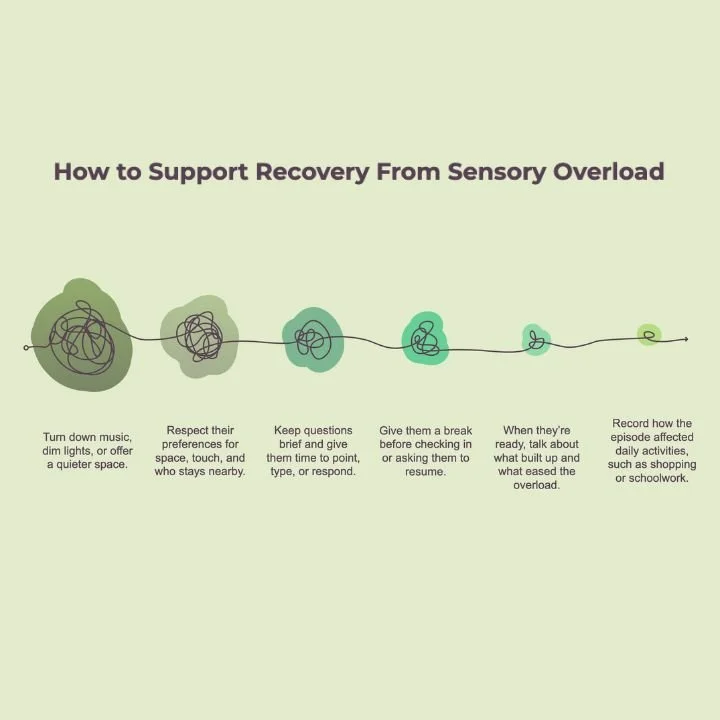
During meltdowns and shutdowns, reduce sensory input and immediate demands, then allow time to recover. Follow the person’s preferences for space, communication, and company rather than assuming the same response helps everyone.
Agree on support preferences when the person is comfortable discussing them: who should stay nearby, how they indicate a break, which communication tools work, and what kinds of touch or instructions feel unhelpful. A short note on a phone can make those preferences available when speech is hard.
Reduce noise, light, and pressure to speak
Turn down music, dim bright lights where you can, or offer a quieter space. Keep sentences short, and avoid having several people talk at once. If the person can respond, offer one simple choice, such as “Quiet room or outside?” Accept pointing or typing, allow time, and avoid repeating the question.
If making even a simple choice is difficult, follow their previously agreed plan and reduce verbal demands further. Avoid unexpected touch or crowding.
Give the person time to recover before checking in
Allow a break without expecting an immediate return to the activity. Quiet doesn’t mean the person is ready to answer questions or resume demands.
When they are ready, review what contributed and what helped. Record the setting, early signs, and recovery needs. Those notes can reveal adjustments such as shorter visits, quieter appointment times, or breaks before distress builds.
Also record what the episode interrupted, such as schoolwork, shopping, eating, or sleep. This helps you explain why you need additional support.
When to seek an evaluation for recurring sensory overload
Seek professional input when recurring overload disrupts school, work, relationships, or daily routines. Sensory processing issues alone don’t establish autism or ADHD. An evaluation examines the broader pattern, including developmental history, attention, communication, and emotional health. You can try practical sensory adjustments while exploring assessment options; everyday support doesn’t need to wait for a diagnosis.
Ask which assessment fits the main concern. A psychologist can assess developmental, attention, and emotional patterns; an occupational therapist can evaluate sensory needs and adjustments for daily activities.
Verdant Psychology’s psychological evaluations provide written findings and practical recommendations for support or further care.
Book a free consultation to review your concerns, evaluation options, and estimated cost.
FAQs about sensory overload, meltdowns, and shutdowns
How long can an autistic shutdown last?
There’s no fixed duration. Recovery needs differ between people and episodes, so avoid setting a deadline for speaking or resuming activities. If someone loses consciousness, cannot be awakened, or is not breathing normally, call 911. The American Red Cross outlines emergency first-aid steps.
Why might a meltdown happen after you get home?
Sensory, social, and emotional demands can accumulate before distress becomes visible. Arriving home doesn’t immediately remove that strain. Consider the demands of the whole day rather than assuming the last event explains the reaction.
How can you tell an autistic meltdown from a tantrum?
Crying or shouting alone can’t reliably distinguish a meltdown from a tantrum. A meltdown involves overwhelm and a temporary loss of control. Consider what happened beforehand and reduce immediate demands.
Can sensory overload happen with ADHD as well as autism?
Yes. People with ADHD can experience sensory overload. A 2025 systematic review and meta-analysis found more pronounced sensory-processing differences in ADHD groups than in comparison groups. The study examined sensory patterns, so it doesn’t show that everyone with ADHD has meltdowns or shutdowns.
How can you prepare for a noisy or crowded place?
Plan the visit for a quieter time, identify somewhere to take a break, and decide how to leave. Bring familiar supports, such as comfortable ear protection, when helpful. Agree on a signal for needing a pause so a spoken explanation is not required during overload.