Many people learn early that showing their natural traits can lead to judgment or unwanted attention. They adjust their expressions, rehearse social cues, and hold back movements that bring comfort.
This is what is masking autism in daily life, shaping yourself to meet expectations, even when it feels draining.
The strain builds quietly. Holding tension in your body, forcing eye contact, and monitoring every reaction slowly wears down emotional energy. Over time, masking can lead to burnout, anxiety, and a sense of disconnect from your real self, making an adult autism assessment essential.
At Verdant Psychology, we support individuals who have spent years performing instead of feeling safe to be themselves. So let’s break down what masking looks like, why it develops, and how it affects emotional well-being so that you can understand your experience with more compassion.
Understanding Masking Autism
Masking autism means changing or hiding natural behaviors to fit into expected social norms. This can look like holding back stims, forcing eye contact, or rehearsing responses to avoid missteps.
The National Autistic Society explains that masking involves hiding autistic traits to meet social expectations and avoid negative reactions from others. Many people learn these habits early to stay safe in environments where difference isn’t welcomed.
Masking involves three main patterns that show up in daily life:
Reducing sensory behaviors, such as holding back movements or reactions
Imitating others to compensate in social situations
Pushing through environments that feel overwhelming
Each pattern takes significant mental and emotional effort. Daily life can start to feel like a constant trade between belonging and exhaustion.
Masking as a Subtype of Autistic Camouflaging

Masking isn’t the whole picture. It’s one part of autistic camouflaging, which is the overall effort to manage how autistic traits are perceived in social situations.
Within this framework, masking specifically involves suppression. It is the ongoing effort to hide natural responses by closely monitoring the body, expressions, and reactions. Masking focuses on what you stop yourself from doing.
Autistic camouflaging is commonly described as involving three overlapping strategies:
Masking, which involves hiding or suppressing autistic traits
Compensation, which uses learned or scripted strategies to navigate social interactions
Assimilation, which involves pushing yourself to blend in or participate despite discomfort
How Autistic Masking Develops

Masking often begins as a protective response. These patterns evolve over time and follow a person through different stages of life.
Childhood
Masking often starts in school settings. Children copy the behaviors of their peers to avoid standing out or being teased. Over time, masking becomes part of how they manage academic demands and social pressure.
Adolescence
During the teen years, masking frequently extends into family and social relationships. Young people may hide reactions to avoid criticism or emotional tension. These patterns become automatic long before adulthood.
Adulthood
Adults often mask in workplaces and relationships. They push through overwhelming environments, rehearse conversations, or present as calm to meet expectations. These efforts help them function but carry a high emotional and physical cost.
Real-Life Autism Masking Examples

Real-life masking often shows up in small but exhausting moments. Someone might clench their fists in a meeting to keep from moving in ways that bring comfort. Another person might rehearse simple small talk to manage sensory pressure from bright lights or crowded spaces.
Masking also appears in daily routines. A barista may smile through loud background noise while feeling overwhelmed inside. A parent may script cheerful responses at school events while quietly managing social fatigue.
Work and relationships add more layers. Some people pace in private before a presentation to release built-up energy. Others mirror a partner’s tone or hide shutdowns to keep the peace. Noticing these patterns gently opens the door to self-compassion and relief.
Mental and Physical Health Impacts of Prolonged Masking
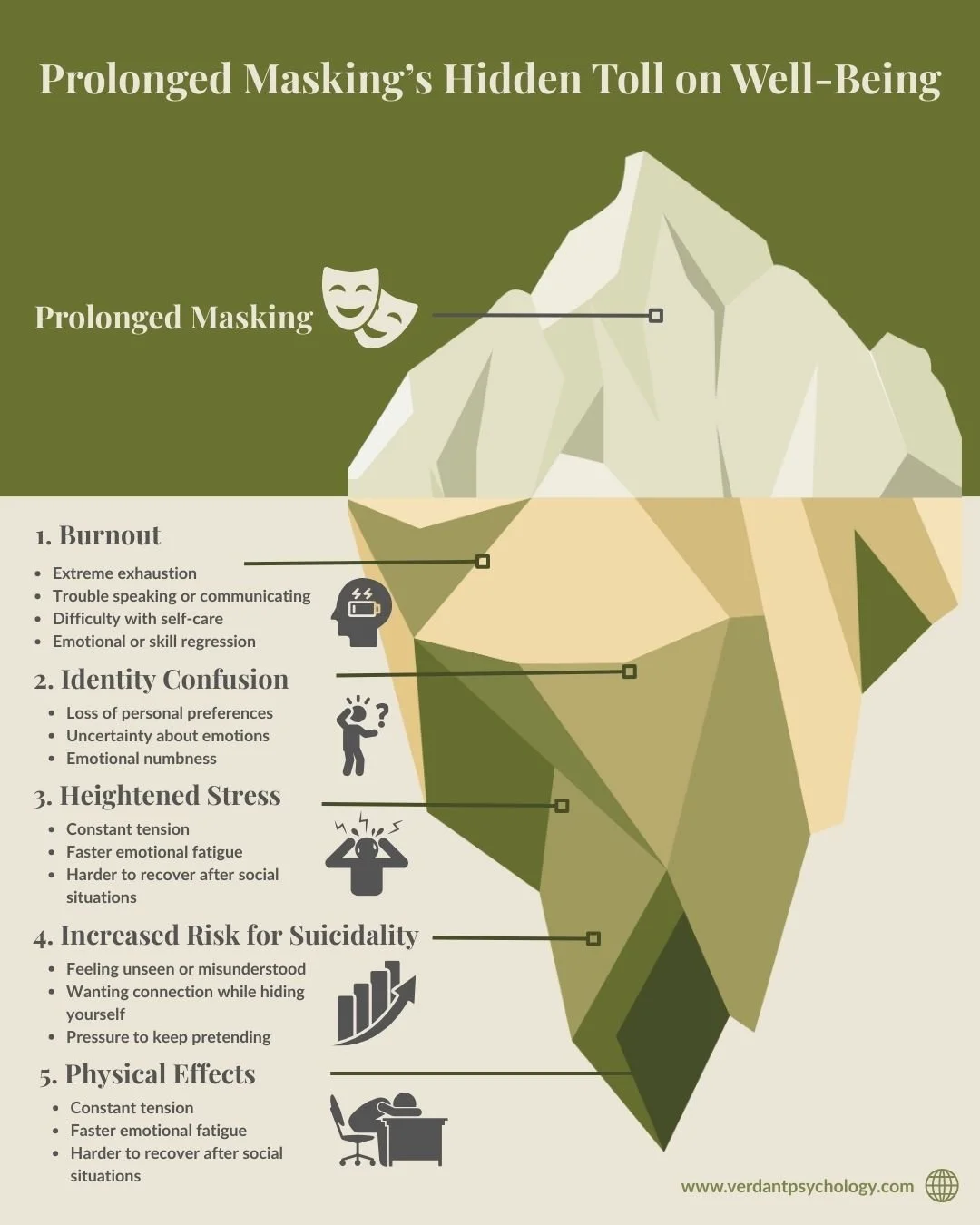
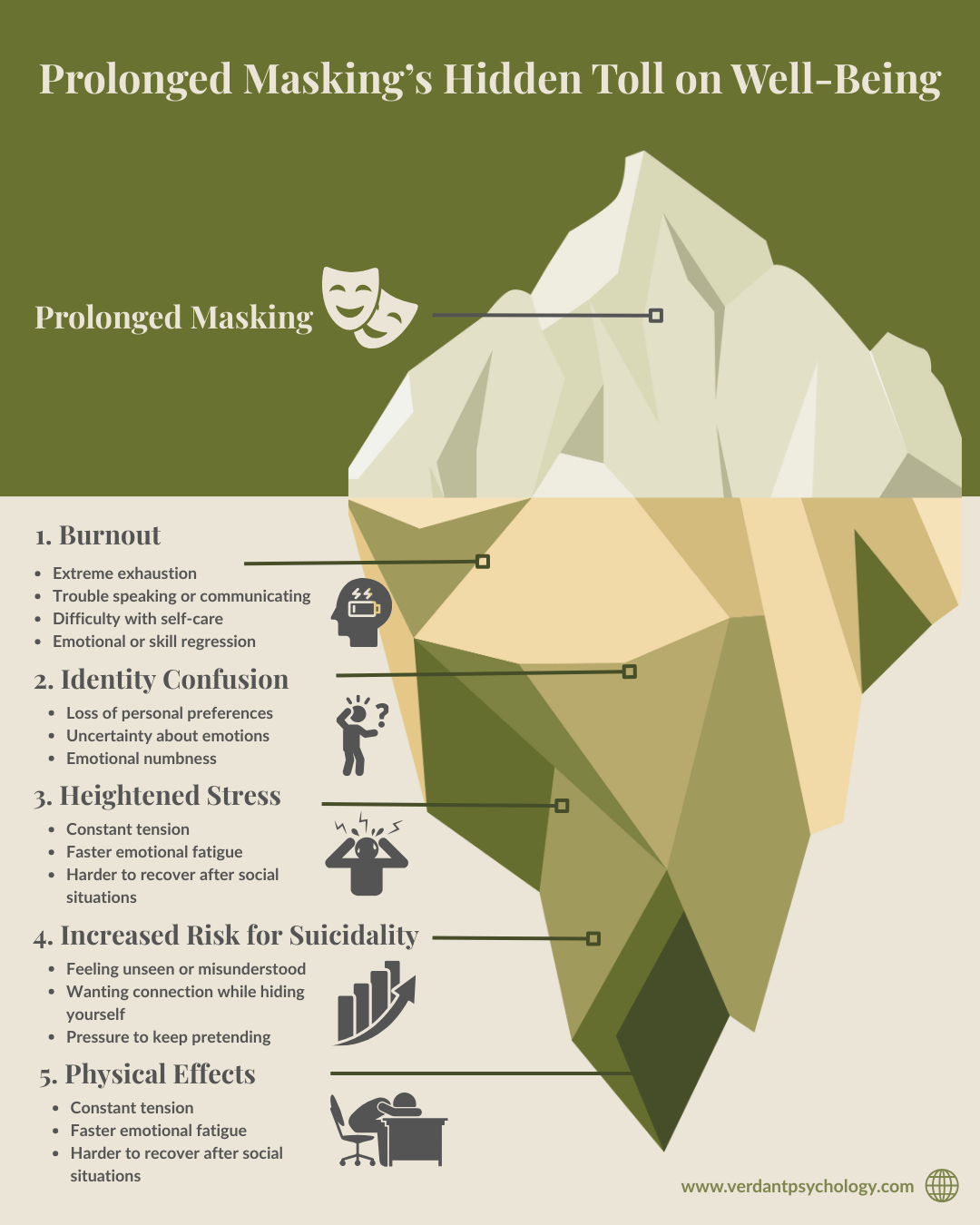
Masking for long periods can affect emotional, physical, and social well-being in significant ways. The strain often builds slowly, making it hard to notice until overwhelm sets in. Below are some of the most common impacts people experience.
1. Burnout
Prolonged masking can lead to a distinct form of burnout that comes from constant sensory and social pressure. Episodes may last for months and can include loss of speech, difficulty with self-care, and regression. This burnout is different from ordinary fatigue because it grows from the effort to hide authentic reactions.
2. Identity Confusion
Masking can blur a person’s sense of who they are. After years of performing, many people lose touch with their genuine preferences and emotional responses. This disconnect often contributes to anxiety and depression.
3. Heightened Stress
Constant self-monitoring keeps the body in a near-constant state of alert. Stress builds quickly, and daily tasks start to feel heavier. Emotional reserves drain faster, leaving little energy for recovery.
4. Increased Risk for Suicidality
Masking can intensify feelings of loneliness. Trying to connect while hiding significant parts of yourself creates deep emotional conflict. This tension can increase the risk of suicidal thoughts.
5. Physical Effects
The toll of masking reaches the body as well. Many people experience chronic fatigue, stomach issues, or other stress-related symptoms. These signs often appear alongside emotional overload.
Measuring Masking With CAT-Q

The Camouflaging Autistic Traits Questionnaire (CAT-Q) is one of the most commonly used tools to measure masking. It includes 25 questions and looks at three areas, which are hiding behaviors, copying others, and pushing through overwhelming situations. Higher scores, especially those above 100, suggest stronger or more frequent masking.
Taking the CAT-Q can help turn vague exhaustion into clearer patterns. It shows which parts of masking take the most energy and where support might help. Reviewing results with a professional adds nuance, especially since some groups, including women, tend to score higher.
Seeing these patterns on paper can feel validating. It encourages self-kindness and makes it easier to understand the strain masking creates.
Step-by-Step Safe Unmasking Guide
Unmasking works best when it is slow, intentional, and safe. Here is a gentle way to begin easing out of constant masking:
Start with one small trait. Choose something private, like stimming when you are alone. Notice how your body feels when you let that behavior happen.
Practice in safe spaces. Unmask around pets, in your room, or in other low-risk settings. Let yourself enjoy the relief without pressure to perform.
Include trusted people. Share a little more of your natural self with someone who feels safe. Pay attention to their response and your comfort level.
Use strategic masking. Keep some masking for high-stakes situations, such as job interviews or formal meetings. Try unmasking more in low-risk moments, like at your desk or at home.
Reflect on your energy. At the end of the day, ask yourself how your energy held up. Adjust how much you unmask based on how your body and mind feel.
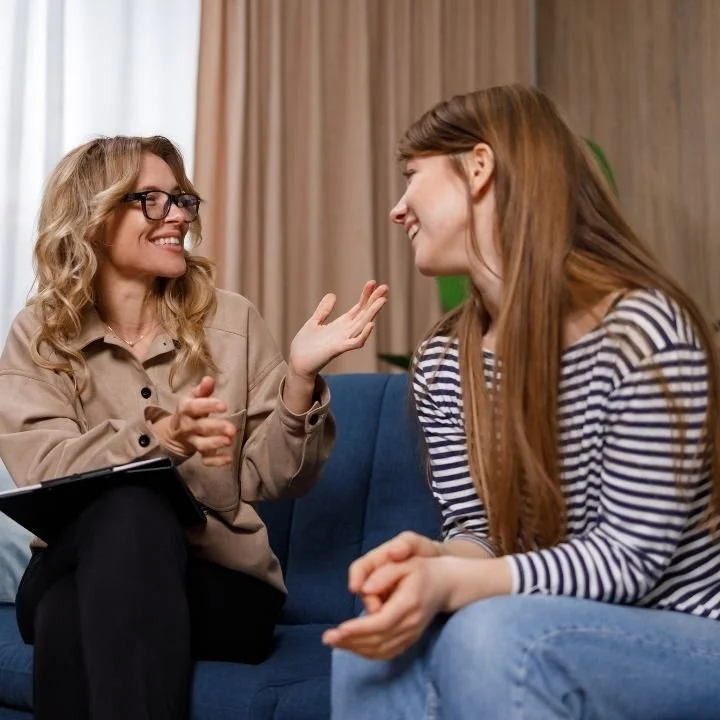
Build supportive networks. Consider working with a therapist who understands neurodivergence and masking. Reading a helpful book on unmasking can also offer guidance and reassurance.
Move at your own pace. It is normal to worry about how unmasking may affect relationships or work. Celebrate small wins and remember that every step toward comfort and authenticity matters.
Finding Freedom Beyond Masking
Masking can help people cope in challenging environments, but it often brings exhaustion, stress, and a fading sense of identity. Understanding what is masking autism makes it easier to see these patterns and begin unmasking safely.
With the right support, daily life can feel more authentic and less overwhelming. Contact us today to start creating space for a life that feels genuinely yours.
Frequently Asked Questions
Does masking autism cause fatigue?
Yes, masking autism leads to profound fatigue known as "social hangover" from constant cognitive effort. Suppressing stims, scripting talks, and forcing interactions drain energy reserves, often resulting in shutdowns after events. Long-term, this contributes to autistic burnout, distinct from typical tiredness. Prioritize rest and safe unmasking for relief.
Can you have mild autism and mask?
Absolutely, those with Level 1 autism or past Asperger's labels mask extensively, appearing neurotypical. High-functioning doesn't mean low effort; autism masking examples like rehearsed small talk hide overload. This delays diagnosis but heightens burnout risk. CAT-Q scores reveal the invisible load.
What are the 3 types of autistic masking?
The three types are suppression (hiding stims/sensory issues), compensation (scripting, forcing eye contact), and assimilation (forcing social participation). These autism masking examples sustain "normalcy" short-term but cause exhaustion. Recognizing them via CAT-Q empowers gradual reduction.
Is unmasking good for you?
Unmasking benefits mental health by reducing burnout and restoring identity, but do it safely to avoid backlash. Start small in trusted spaces, using strategic masking at work. Resources like "Unmasking Autism" guide this, fostering authentic joy without relational or job risks.
Why do I mask around my family?
Family masking often stems from childhood compliance or trauma, avoiding criticism for quirks. It maintains harmony but erodes trust. Autism masking examples include stifling meltdowns. Gentle disclosure reframes it as growth, building deeper bonds through understanding.