How the Latest Research on Autism Maps Developmental Change
When development or behavior feels different from what others expect, it can create a quiet mix of worry and confusion.
That uncertainty often grows over time, especially when answers feel incomplete or outdated. It can leave individuals and families wondering why progress looks different and what direction to take next.
The latest research on autism offers new insight into why these differences appear and how support can be better aligned with each person’s needs.
This guide brings together current scientific research and practical perspectives to help you understand what these developments mean.
The Four Biological Patterns of Autism

One of the most significant findings in the latest research on autism is the discovery of four biologically distinct subtypes. A major 2025 study from Princeton University, published in Nature Genetics, analyzed more than 5,000 children and identified unique genetic and developmental patterns.
This shifts autism from being viewed as a single condition to a collection of related but distinct developmental profiles.
Here are the four subtypes identified in the research:
1. Social and Behavioral Challenges
About one-third of children fall into this group. They often show social difficulties and behavioral traits and are usually diagnosed later, around age five. Many have genetic patterns linked to conditions like ADHD or depression.
2. Early Developmental Delays
Nearly 30% of children show early language and cognitive delays along with social challenges. Researchers found rare gene mutations active during prenatal brain development in this group. These genetic differences provide a clearer connection between biology and early developmental setbacks.
3. Mixed Autism With Minimal Delays
Around 29% of children have moderate autism traits but fewer early developmental delays. Their cognitive and language development tends to follow a more typical timeline. This highlights how autism can present without significant early developmental concerns.
4. Broadly Affected
This is the smallest subtype, representing about 10% of children. They face complex challenges across communication, social interaction, repetitive behaviors, and co-occurring mental health conditions. Genetic analysis shows a higher number of rare, impactful mutations in this group.
Early Interventions That Shape Development

Early intervention is one of the most promising areas in recent autism research. Studies show that when support begins during the first years of life, it can positively influence developmental pathways and long-term outcomes.
Early Start Denver Model (ESDM)
ESDM usually begins around 18 months and blends developmental and behavioral approaches. Research shows children in the program gain an average of 18 IQ points, along with stronger language and social communication skills. Some children even shift from a more severe diagnosis to a milder one after consistent intervention.
Infant Start Program
Infant Start supports babies as young as 6 to 15 months who show early signs of autism. In one study, six out of seven children reached typical developmental milestones by age two or three. These results highlight how early support can lessen symptom severity before neural pathways become more set.
While early support can shape the first years of development, many needs continue into adulthood, where the challenges and experiences look very different.
Autism in Adulthood

Recognition of autism in adults is increasing, especially for those ages 26 to 34. This shift reflects a growing understanding that autism is a lifelong condition, not something limited to childhood.
Research shows the gender gap in diagnosis is narrowing. Historically, the male-to-female ratio was 4.29:1 in children (2011). New findings show it declined to 3.01:1 in children and 2.60:1 in adults by 2022, due to better recognition of how autism presents in females and reduced diagnostic bias.
Employment remains one of the biggest challenges for autistic adults. About 75% experience unemployment or underemployment, often because workplaces do not accommodate sensory or communication needs. Many job losses stem from social barriers rather than job performance.
Focusing on autism in adulthood helps expand support beyond childhood. Workplace accommodations, vocational training, and inclusive policies can make a meaningful difference. Compassionate, lifelong support helps adults maintain independence and well-being.
New Ways to Diagnose Autism
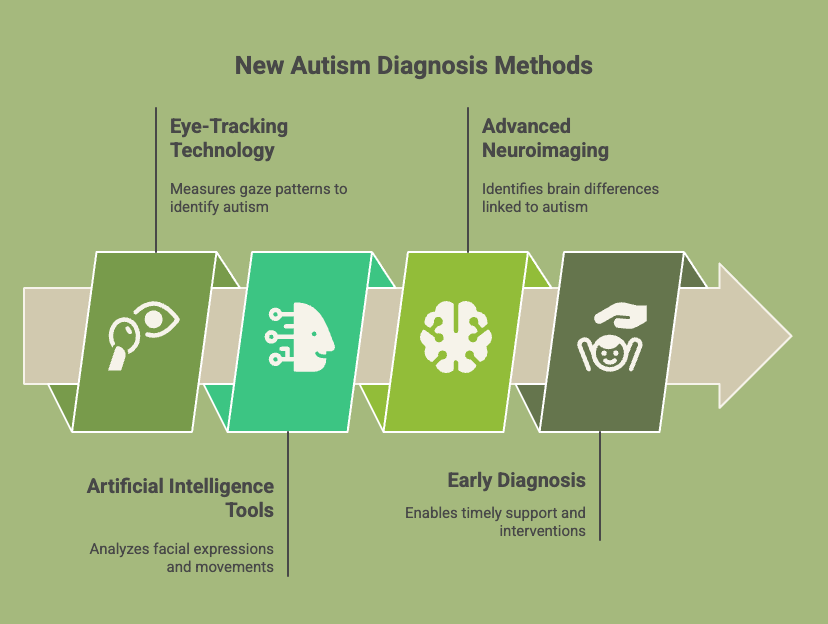
Accurate and early diagnosis is essential for timely support. The latest research on autism is transforming this process through new technologies that help clinicians identify developmental differences earlier and more reliably.
1. Eye-Tracking Technology
Eye-tracking tools measure how young children look at social cues. In a 2024 study of 146 children, specific gaze patterns distinguished autistic children from those with other developmental delays with 78% sensitivity. When these results were combined with a physician’s clinical evaluation, accuracy rose to more than 90%.
2. Artificial Intelligence Tools
AI models can analyze facial expressions, gaze behavior, and movement patterns to streamline the diagnostic process. These systems reduce traditional assessment time by more than 90% while maintaining very high accuracy. AI also helps decrease human error and reduce diagnostic bias.
3. Advanced Neuroimaging
Deep-learning approaches applied to brain imaging can identify structural and functional differences linked to autism. Some tools show potential for predicting autism before age two by analyzing brain surface anatomy and early language-related pathways. This offers a promising direction for even earlier identification.
These innovations shorten waiting times, support clinicians in making accurate decisions, and open the door to early interventions that meaningfully shape development.
Where Science Meets Support
The latest research on autism shows how rapidly our understanding is evolving, but it also highlights the importance of having the right support along the way. Insights from genetics, early interventions, and new diagnostic tools can only make a difference when they’re paired with thoughtful, individualized guidance from trained professionals.
If you or someone you care about has questions, concerns, or wants clarity about next steps, seeking professional testing and evaluation is one of the most supportive choices you can make. A qualified clinician can help interpret these findings in a way that fits your or your child’s lived experience.
For compassionate and evidence-based guidance and assessment, contact us today.
Frequently Asked Questions
How is autism diagnosed today compared to older methods?
Modern diagnosis combines clinical observation with tools like eye-tracking, developmental history, and structured assessments. These approaches help specialists identify autism earlier and more accurately. Newer technologies, such as AI models and neuroimaging, add additional insight, but diagnosis still relies on a clinician who understands behavior across settings.
What does the latest research on autism say about early signs?
Studies suggest some developmental markers can appear as early as six months. Subtle differences in social attention, eye gaze, or communication patterns may signal the need for evaluation. These signs do not confirm autism but help families seek support sooner, which can positively influence developmental progress.
Why do some people receive an autism diagnosis in adulthood?
Many adults were overlooked in childhood because their traits were subtle, masked, or misunderstood. Growing awareness helps clinicians better recognize diverse presentations. Late diagnosis offers validation and access to accommodations, therapy, and self-understanding that can improve daily functioning and emotional well-being.
Are there different types of autism according to new research?
Yes. Recent studies identify four biological subtypes based on genetics and developmental patterns. These subtypes differ in language development, social traits, and co-occurring challenges. Understanding these groups may lead to more individualized support, shifting the field away from a single autism profile.
What treatments or supports show the strongest evidence today?
Early developmental programs, behavioral therapies, speech-language support, and family-based interventions hold the strongest evidence. Some therapies show better outcomes when started in the first years of life. Emerging research is exploring genetics-informed treatments, sensory supports, and technology-assisted tools that tailor care to each person’s needs.