What Is Inhibitory Control in Executive Functioning?
Why is inhibitory control important? It plays a major role in how people manage distractions, control impulses, and maintain focus on important tasks.
Inhibitory control helps individuals pause before acting and make more thoughtful decisions. As a core executive functioning skill, it supports attention, emotional regulation, self-control, and decision-making across many areas of daily life.
Below, we’ll explain how inhibitory control contributes to executive functioning.
What is inhibitory control in psychology?

Inhibitory control is the ability to suppress automatic responses, distractions, thoughts, or behaviors that interfere with focus and decision-making.
In psychology, inhibitory control is considered one of the core executive functions. It allows individuals to pause before acting, resist immediate impulses, and maintain attention on important tasks.
For example, inhibitory control helps a student remain focused during an exam despite nearby distractions.
Without this ability, attention, self-control, and decision-making become more difficult.
What is inhibitory control in executive functioning?
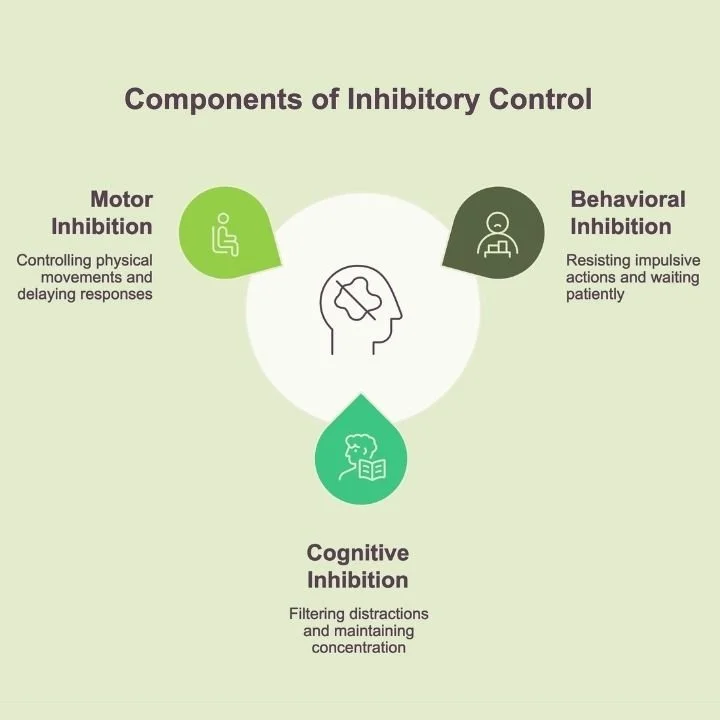
In executive functioning, inhibitory control is commonly divided into three areas that help manage actions, thoughts, and physical responses.
Behavioral inhibition
Behavioral inhibition is the ability to resist impulsive actions. It helps individuals stop themselves from acting immediately when a situation requires patience, planning, or self-control.
Examples include waiting for a turn, resisting interruptions, or considering consequences before making decisions.
Cognitive inhibition
Cognitive inhibition is the ability to filter out distractions and ignore irrelevant information. This skill helps people maintain concentration during conversations, complete tasks in distracting environments, and reduce interference from intrusive or competing thoughts.
Motor inhibition
Motor inhibition is the ability to stop, suppress, or delay physical movements when a response needs to be controlled. This skill helps regulate physical actions in situations that require sitting still, waiting, or following instructions.
How inhibitory control affects daily life

The ability to manage impulses and distractions influences many everyday activities, from maintaining focus to regulating emotions.
Many everyday activities depend on the ability to pause and regulate responses. For example, staying focused on a task despite distractions relies on it.
Inhibitory control also plays an important role in relationships. It helps people listen without interrupting, think before speaking, and manage emotional reactions during disagreements.
This executive function also supports long-term planning by helping individuals prioritize future goals over immediate impulses.
Signs of poor inhibitory control

Poor inhibitory control appears as impulsivity, distractibility, emotional reactivity, or difficulty regulating behavior. Signs may include:
Frequently interrupting conversations
Acting before considering consequences
Difficulty waiting for turns
Becoming easily distracted by noises, notifications, or surrounding activity
Struggling to stay focused on school, work, or household tasks
Making impulsive purchases or decisions
Experiencing frustration quickly during challenging situations
Difficulty regulating emotional reactions
Frequently shifting attention between tasks
Trouble following multi-step instructions without becoming sidetracked
These difficulties do not automatically indicate a psychological condition. However, an evaluation may be helpful if these challenges begin affecting daily functioning.
What can affect inhibitory control?

Several factors can influence inhibitory control, including age, stress, sleep quality, neurological development, and mental health conditions.
Changes in these areas may affect how effectively a person manages distractions, controls impulses, regulates emotions, and makes decisions. When inhibitory control is weaker, tasks that require patience, focus, and self-regulation may become more difficult.
Difficulties with inhibitory control are also commonly associated with ADHD and other executive functioning challenges. In these situations, a comprehensive psychological evaluation can help identify contributing factors and guide appropriate recommendations.
Find out what is affecting focus, impulse control, or executive functioning
Challenges with focus, impulsivity, emotional regulation, or task completion can stem from a variety of factors. While occasional lapses are a normal part of life, ongoing patterns may reflect underlying executive functioning concerns.
Identifying what is contributing to these patterns can provide valuable direction for future planning, support, and intervention. At Verdant Psychology, evaluations can help identify factors that may be affecting executive functioning.
Book a Free Consultation today.
Frequently asked questions
What is an example of inhibitory control?
Waiting to respond during a disagreement instead of reacting immediately is a common example. Inhibitory control helps create a pause between an impulse and a response, allowing for more thoughtful decision-making.
What are the signs of poor inhibitory control?
Frequent interruptions, impulsive decisions, emotional outbursts, and difficulty resisting distractions are common signs. Some people may also struggle to wait their turn, follow routines, or stay focused on tasks.
How do I improve inhibitory control?
Consistent practice can strengthen inhibitory control. Strategies such as mindfulness, structured routines, reducing distractions, improving sleep habits, and cognitive behavioral therapy may help improve self-regulation and focus.
What causes poor inhibitory control?
Several factors can contribute, including sleep deprivation, chronic stress, ADHD, executive functioning deficits, brain injuries, and certain neurological conditions. In some cases, developmental factors may also affect self-regulation skills.
What age does inhibitory control develop?
Inhibitory control begins developing in early childhood and continues improving through adolescence. Research suggests executive functioning skills continue maturing into a person's mid-20s as the brain's prefrontal cortex develops.