Attention Span and ADHD: What You Need to Know
Is a short attention span always a sign of ADHD? A short attention span can be associated with ADHD, but attention concerns alone are not enough to determine if someone has the condition.
ADHD affects how attention is regulated, which can result in inconsistent patterns of focus across different situations and activities.
Below, we discuss how ADHD affects attention span and when attention concerns may benefit from further evaluation.
Is short attention span a sign of ADHD?

A short attention span can be a sign of Attention-Deficit/Hyperactivity Disorder (ADHD), but attention problems are not always caused by ADHD. Difficulties with concentration and distractibility can occur for many reasons, including stress, anxiety, sleep problems, and other mental health or learning concerns.
ADHD is often associated with inattention, but it is better understood as a difficulty regulating attention. A person with ADHD may struggle to stay focused during routine tasks yet maintain attention for long periods when an activity feels highly engaging or rewarding.
This pattern of inconsistent attention is one of the characteristics that distinguishes ADHD from other causes of attention difficulties.
How ADHD affects attention span
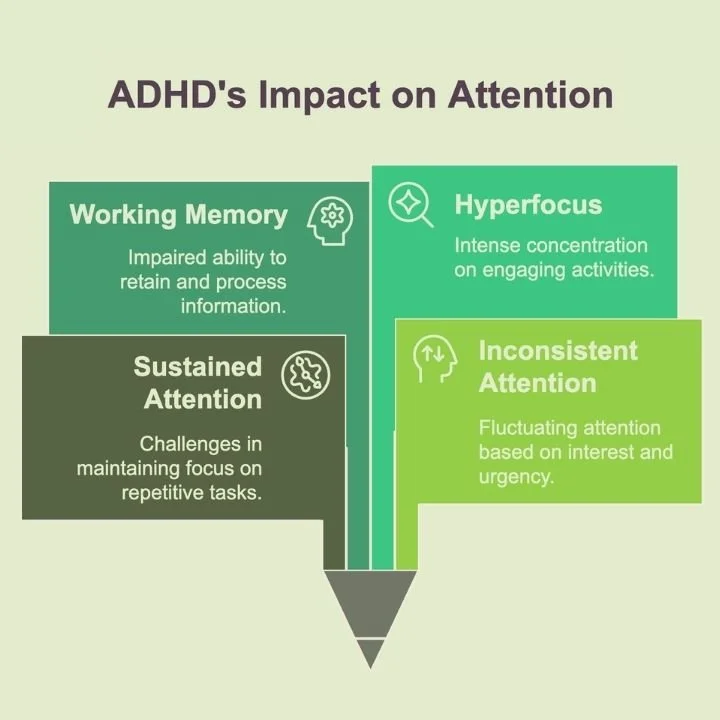
ADHD affects attention in several ways, including the ability to sustain focus, maintain consistent attention, manage working memory, and regulate hyperfocus.
ADHD can make sustained attention harder
Sustained attention refers to the ability to remain focused on an activity. People with ADHD find it more difficult to stay engaged during tasks that feel repetitive, predictable, or mentally demanding.
As attention decreases, mistakes may become more common, and task completion may become more difficult.
ADHD can make attention inconsistent
Attention in ADHD is often inconsistent rather than absent. Some tasks may feel almost impossible to focus on, while others hold attention with very little effort. Interest, urgency, novelty, and stimulation can all influence how easily attention is maintained.
ADHD can affect working memory and follow-through
Working memory helps people keep information in mind while completing tasks. When it is affected, it can become harder to follow instructions, keep track of steps, and complete responsibilities from start to finish.
ADHD can also involve hyperfocus
ADHD does not always involve a lack of attention. Some people experience hyperfocus, a state of intense concentration on activities that feel especially engaging or rewarding. While this can sometimes support productivity, it may also make it harder to switch tasks or keep track of time.
How to increase attention span with ADHD

Attention span can improve when daily routines and environments support better attention regulation. Small changes can sometimes make focusing more manageable.
Break tasks into shorter work blocks
Start by dividing larger tasks into smaller, more manageable steps. Focusing on one step at a time can make tasks feel less overwhelming and easier to begin. Some people find it helpful to work for 15 to 25 minutes before taking a short break.
Use reminders and visual cues
Keep important information visible throughout the day. Calendars, alarms, written checklists, and visual schedules can help reduce the chances of forgetting tasks, appointments, or deadlines and make it easier to stay on track.
Reduce distractions before starting
Before beginning a task, remove distractions that may compete for attention. Turning off notifications, limiting background noise, and keeping workspaces organized can make it easier to maintain focus and complete tasks.
When attention problems may point to ADHD

Attention problems may point to ADHD when they are persistent, occur across multiple settings, and begin affecting daily functioning. Common patterns may include:
Difficulty sustaining attention during tasks that require mental effort
Frequently becoming distracted by unrelated thoughts or surroundings
Trouble following through on tasks or responsibilities
Difficulty managing organization, planning, or time effectively
Forgetfulness in everyday activities
Because attention difficulties can have many causes, a comprehensive evaluation can help determine if ADHD may be contributing to these concerns.
Take the next step with ADHD testing
Persistent attention difficulties can create challenges across different areas of life. While occasional lapses in focus are common, persistent patterns of inattention may warrant a closer look.
An ADHD evaluation can help identify factors that may be contributing to these challenges and provide greater clarity about attention, executive functioning, and next steps.
Book a Free Consultation today.
Frequently asked questions
Do I have ADHD or just a low attention span?
A low attention span alone does not mean you have ADHD. ADHD typically involves a long-term pattern of attention, organization, and follow-through difficulties that affect multiple areas of functioning.
What does ADHD attention feel like?
ADHD attention often feels unpredictable. Some tasks may require significant effort to stay focused, while others capture attention so strongly that it becomes difficult to disengage or shift focus.
Why can people with ADHD focus on some things but not others?
Interest can strongly influence attention in ADHD. Activities that feel engaging, rewarding, or urgent often hold attention more easily than routine tasks that provide less stimulation.
What makes ADHD attention problems worse?
Sleep deprivation, chronic stress, multitasking, and high-distraction environments can make attention regulation more difficult. These factors may increase distractibility and reduce the ability to sustain focus.
When should I consider ADHD testing for attention problems?
Consider ADHD testing when attention difficulties persist over time, occur across multiple settings, and begin affecting academic performance, work responsibilities, or other important areas of functioning.