Autism Versus Social Anxiety Disorder
Social situations can feel confusing, exhausting, or stressful when conversations are hard to follow or the fear of saying something wrong never goes away. These experiences often lead people to question if they are dealing with autism or social anxiety disorder.
The challenge is that both conditions can involve social discomfort, avoidance, and difficulty navigating conversations. Because the behaviors can look similar on the surface, it can be difficult to tell what is actually causing these experiences.
The difference matters because the causes and support strategies are not the same. Our clinicians evaluate developmental and anxiety-related conditions using a structured autism assessment to distinguish between these patterns.
This guide explains the role of anxiety in autism, the signs of each condition, where they overlap, and the differences that help clarify when evaluation may be helpful.
The role of anxiety in autism

Anxiety is a common part of autism, increasing stress during social interactions, sensory experiences, and unpredictable situations.
Research suggests that 40–50% of autistic individuals develop social anxiety disorder, which is much higher than rates in the general population.
Difficulty interpreting social cues such as tone of voice, facial expressions, or indirect language can make interactions feel uncertain or confusing. These experiences may increase anxiety in social situations.
Sensory sensitivities can also contribute to anxiety. Loud noises, crowded environments, or bright lighting may intensify stress, making social spaces feel exhausting or difficult to tolerate.
Repeated stressful social experiences can strengthen anxiety patterns, especially as social expectations increase during adolescence and adulthood. Early support and targeted therapies can help reduce anxiety and improve coping strategies for social and sensory challenges.
Signs of anxiety disorder
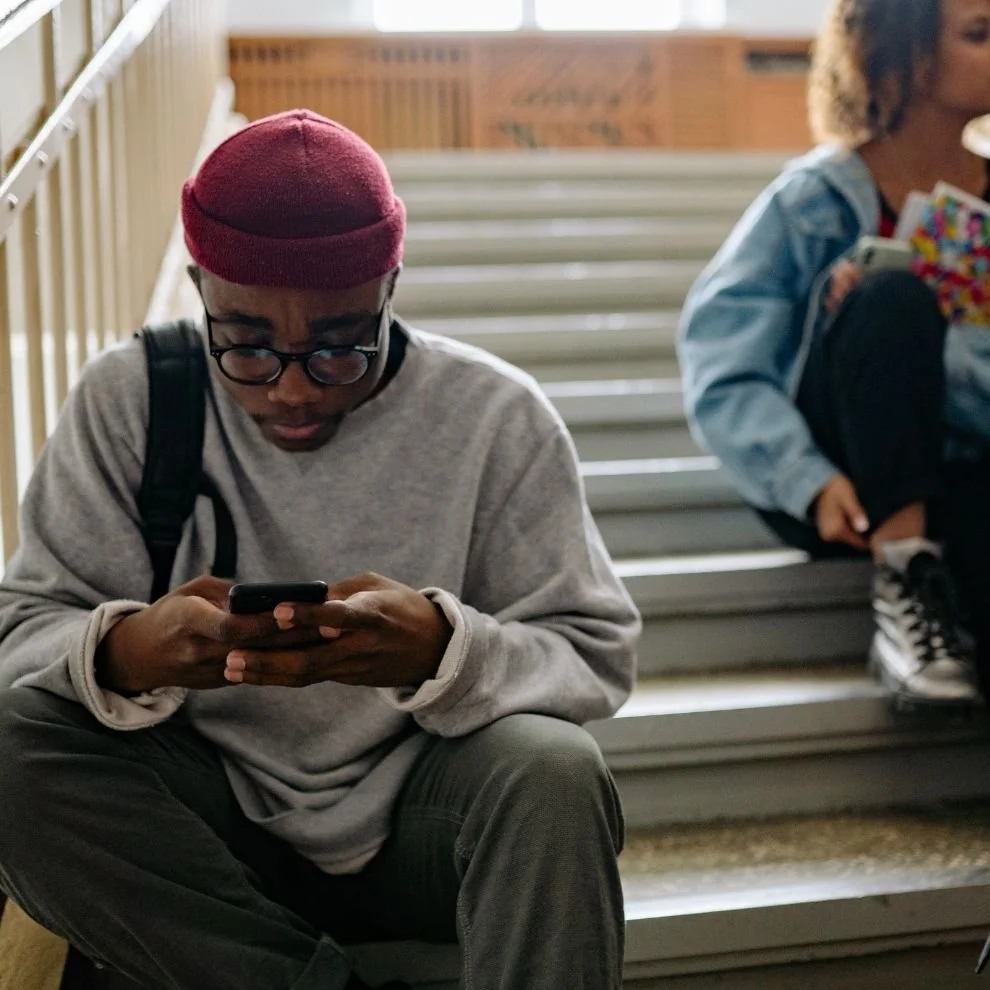
The common signs of anxiety are intense fear of judgment, avoiding social situations, physical symptoms like sweating or rapid heartbeat, difficulty speaking in groups, and persistent worry about embarrassment.
These signs often appear in everyday social situations:
Intense Fear of Social Judgment
People with anxiety often experience a strong fear of being criticized, embarrassed, or rejected during conversations. Even simple interactions may feel stressful because the person worries about how others are evaluating their behavior, words, or appearance.
Avoidance of social situations
Avoiding events or activities that involve interaction is a common pattern. Someone may skip meetings, decline invitations, or avoid situations where conversation is expected in order to reduce feelings of anxiety or potential embarrassment.
Physical anxiety symptoms
Anxiety often appears through physical reactions during social situations. These can include a rapid heartbeat, sweating, shaking, nausea, blushing, or feeling tense when speaking with others or being observed.
Excessive preparation or overthinking
Individuals with anxiety may spend significant time mentally preparing for conversations or replaying interactions afterward. There may be repeated thoughts about what to say, worry about saying the wrong thing, or detailed analysis of past conversations for possible mistakes.
Difficulty speaking in groups
Group settings such as meetings, presentations, or classroom discussions can feel especially uncomfortable. Speaking in front of others may trigger strong nervousness, making it difficult to express ideas clearly or participate in discussions.
Social withdrawal
Over time, anxiety may lead someone to withdraw from phone calls, gatherings, or public settings. This pattern often develops as a way to avoid uncomfortable feelings, but it can gradually lead to isolation and reduced confidence in social situations.
Signs of autism

Autism may present with differences in social communication, repetitive behaviors, strong routines, and sensory sensitivities that influence how a person interacts with their environment.
These patterns usually begin in early childhood and may continue into adulthood:
Difficulty reading social cues
Autistic individuals find it challenging to interpret facial expressions, tone of voice, body language, or sarcasm. Because social signals may feel unclear or unpredictable, conversations can sometimes become confusing.
One-sided conversations
Communication may sometimes focus heavily on specific interests or topics. A person may speak at length about subjects they enjoy, or find it difficult to maintain the usual back-and-forth flow expected in many conversations.
Repetitive behaviors or movements
Certain repetitive actions may appear as a way to regulate attention or sensory input. These behaviors can include movements such as rocking or hand motions, repeating words or phrases, or following familiar routines.
Strong preference for routines
Predictability can feel important for many autistic individuals. Changes in schedules, unexpected events, or disruptions to routines may cause stress because familiar patterns help create a sense of stability and control.
Intense or focused interests
Many autistic individuals develop deep knowledge or a strong interest in particular topics. These focused interests can become an important source of enjoyment, learning, and motivation.
Sensory sensitivities
Sensory experiences may feel stronger or more overwhelming than usual. Loud sounds, bright lights, certain textures, or crowded environments can cause discomfort or fatigue.
Overlap between autism and social anxiety

Autism and social anxiety can look similar because both may involve social discomfort, avoidance of interactions, and difficulty navigating conversations.
The shared behaviors sometimes make it hard to determine if challenges are related to social processing differences or fear of negative judgment.
Social avoidance
Avoiding social situations can occur in both autism and social anxiety, but the reasons are different.
In autism, avoidance may occur because social cues feel confusing or environments feel overwhelming. In social anxiety, avoidance is usually driven by fear of embarrassment, criticism, or negative evaluation.
Limited eye contact
Reduced eye contact can appear in both conditions. Autistic individuals may naturally use less eye contact as part of their communication style. In social anxiety, eye contact may be avoided because the person feels uncomfortable being watched or judged.
Discomfort in group settings
Group conversations and busy social environments can feel hard for different reasons. For autistic individuals, unpredictable interactions or sensory overload may create stress.
For someone with social anxiety, the discomfort is often linked to fear of being evaluated or making mistakes.
Social awkwardness
Interactions may sometimes feel awkward in both conditions. In autism, this may happen because social signals such as tone, body language, or sarcasm are harder to interpret.
In social anxiety, the awkwardness often comes from overthinking conversations and worrying about saying the wrong thing.
Key differences
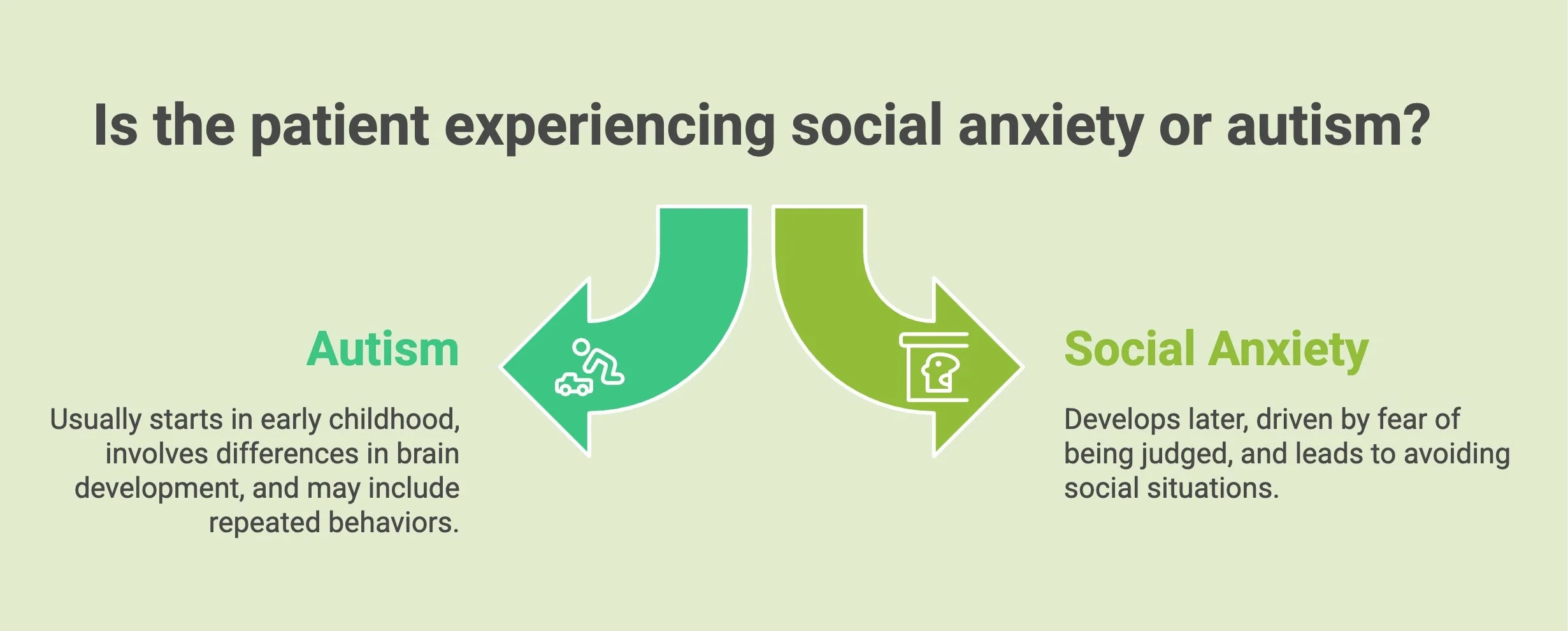
While both can involve social discomfort, autism reflects neurodevelopmental differences, whereas social anxiety is primarily driven by fear of negative evaluation.
Age of onset
Autism typically appears in early childhood, often before a child begins school. Signs may include differences in communication, social interaction, or repetitive behaviors. Social anxiety disorder usually develops later, most often during adolescence or early adulthood.
Core cause of social difficulties
In autism, social challenges often arise from differences in how social cues, communication, and sensory information are processed. In social anxiety disorder, the main difficulty is fear of embarrassment, criticism, or negative judgment during social interactions.
Additional behavioral signs
Autism often includes patterns such as repetitive movements, strong routines, or sensory sensitivities. These features are not typical in social anxiety disorder, where symptoms mainly involve fear and avoidance of social situations.
Response to treatment
Support for autism usually focuses on developing communication skills, social understanding, and environmental accommodations. Social anxiety disorder is commonly treated with approaches such as cognitive behavioral therapy (CBT), which helps reduce fear and avoidance.
Can autism cause social anxiety?

autism can increase the likelihood of social anxiety because repeated social challenges and sensory stress can make everyday interactions feel overwhelming.
Research suggests that social anxiety may affect up to about 50% of autistic individuals, a significantly higher rate than in the general population.
Social anxiety may develop when social cues feel confusing, conversations become unpredictable, or environments feel overstimulating. Situations such as missing subtle signals, navigating small talk, or managing crowded and noisy spaces can gradually make social interactions feel stressful.
Masking can also play a role. Some autistic individuals try to hide or adjust their natural behaviors to meet social expectations, which requires constant mental effort.
This pressure can lead to exhaustion, heightened self-awareness, and greater anxiety during social situations.
Because autism and social anxiety can occur together, a careful psychological evaluation is often needed to determine how each condition contributes to a person’s experiences and what type of support may be helpful.
Get answers with Verdant Psychology
The differences between autism and social anxiety disorder can be difficult to recognize because both conditions may involve social discomfort, avoidance, or communication challenges.
Recognizing how autism and social anxiety disorder differ can help explain why certain social experiences feel difficult and what type of support may be most helpful.
A professional evaluation can help determine whether symptoms are related to autism, social anxiety, or both, providing clearer direction for treatment and support. Book a free consultation to discuss if an evaluation may be the right next step.
Frequently asked questions
What is the difference between autism and social anxiety disorder?
Autism is a neurodevelopmental condition that begins in early childhood and affects social communication, behavior patterns, and sensory processing, while social anxiety disorder is an anxiety condition defined by fear of negative judgment in social situations and usually develops during adolescence or adulthood.
Can someone have both autism and social anxiety disorder?
Yes. A person can have both autism and social anxiety disorder. Clinical research shows that many autistic individuals also experience social anxiety.
How do clinicians diagnose autism and social anxiety disorder?
Clinicians diagnose these conditions through psychological evaluation. This includes clinical interviews, developmental history, behavioral observation, and standardized assessment tools.
Can social anxiety be mistaken for autism?
Yes. Both conditions can involve social avoidance, reduced eye contact, and discomfort in conversations. The difference is that autism involves social communication differences, while social anxiety is driven by fear of negative judgment.
When should someone seek an evaluation for autism or social anxiety?
An evaluation is recommended when social difficulties, anxiety, or communication problems interfere with daily life, work, school, or relationships. A psychologist can assess symptoms and determine the correct diagnosis.