Who Can Diagnose Autism in Florida (Online Testing Guide)
Who can diagnose autism in Florida? This is an important question for families and individuals seeking a professional evaluation.
A formal autism diagnosis is provided by a licensed professional who completes a comprehensive evaluation using developmental history, clinical interviews, observations, and standardized assessment methods. Online autism evaluations are also available through qualified licensed providers.
This guide explains who can diagnose autism, how testing works, and what to expect from the evaluation process.
What counts as a formal autism diagnosis in Florida
A formal autism diagnosis in Florida comes from a qualified and licensed clinician who completes a comprehensive evaluation using clinical information, developmental history, and standardized assessment methods.
Licensed clinicians who can diagnose autism
Diagnoses in Florida are made by qualified clinicians with expertise in autism evaluation, including licensed clinical psychologists, psychiatrists, developmental pediatricians, and pediatric neurologists. These professionals evaluate developmental patterns, social communication, behaviours, and how concerns affect daily life.
What screenings and online quizzes can’t do
Online quizzes and autism screening tools can identify traits that may require further evaluation, but they cannot provide a formal diagnosis. A qualified clinician must review the complete picture, including history, symptoms, and daily functioning.
What your diagnostic report should include
An autism diagnostic report summarizes the evaluation process, assessment findings, and clinical conclusions. It includes developmental history, observed behaviours, and test results used to support the diagnosis. The report also provides recommendations for accommodations, interventions, and next steps.
How autism testing usually works
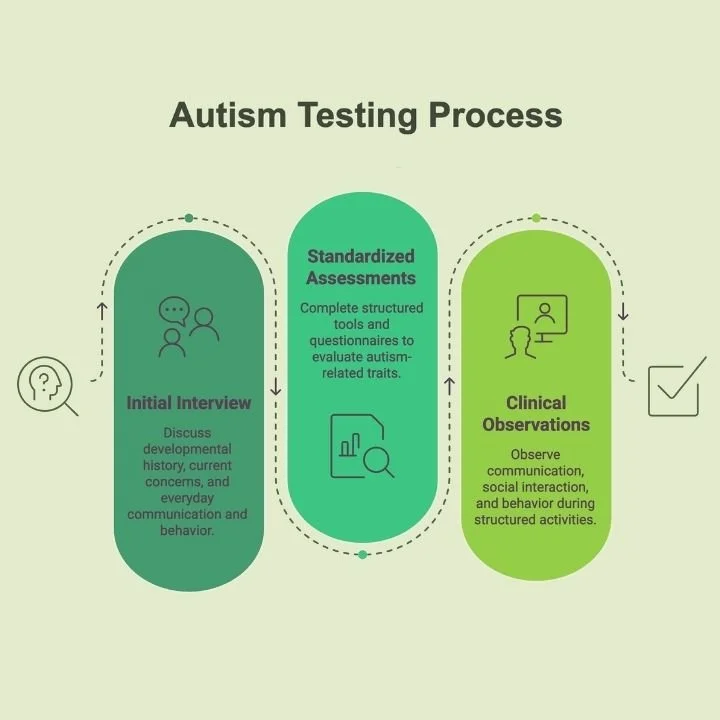
Autism testing in Florida typically involves a series of steps that include an initial interview, developmental history review, standardized assessments, clinical observations, and a feedback session.
Clinical interview and developmental history
The first step involves discussing developmental history, current concerns, communication patterns, behaviour, and daily functioning. For children, psychologists often gather information from parents or caregivers about early milestones, social development, and changes noticed.
Standardized tools and observation
The evaluation includes structured assessments, questionnaires, and behavioural observations to examine autism-related traits. Tools such as the ADOS-2 help clinicians observe communication, interaction, and responses during specific activities or conversations.
Diagnosis, recommendations, and next steps
After reviewing all evaluation information, the psychologist determines if the criteria for Autism Spectrum Disorder are met. The results are explained through a feedback session, followed by recommendations for support, accommodations, or additional services.
How online autism testing works in Florida

Online autism testing uses secure video appointments and digital assessment methods to complete parts of the evaluation remotely.
What can be completed through telehealth
Telehealth includes clinical interviews, developmental history discussions, questionnaires, and feedback sessions. These appointments help psychologists gather information, review findings, and discuss recommendations through secure online platforms.
When in-person testing may be better
In-person testing may be recommended when an autism evaluation requires closer observation, hands-on activities, or information that is difficult to gather online. This can be helpful for toddlers, complex evaluations, or cases where direct interaction is important.
How to choose the right evaluator
Choose an autism evaluator by reviewing their license, experience with autism assessments, and the evaluation methods they use. Look for a psychologist who explains the testing process clearly, provides a detailed report, and has experience working with the person’s age group.
Start online autism testing in Florida with Verdant
Online autism testing provides a convenient way to begin the evaluation process from home while connecting with a qualified psychologist.
Verdant Psychology helps individuals and families access professional autism assessments, receive clear information about their concerns, and better understand available support options
Book a Free Consultation today to get started with online testing.
Frequently asked questions
What is the biggest red flag for autism?
The biggest red flag for autism is a loss of previously developed skills, such as speech, social interaction, or communication abilities. Other signs that may require evaluation include limited response to names, reduced shared attention, and differences in play or interaction.
What are the three main symptoms of autism in adults?
The three main areas involve social communication differences, restricted or repetitive behaviours, and sensory differences. Adults may experience challenges with conversations, routines, relationships, or managing overwhelming environments.
What does level 1 autism look like?
Level 1 autism involves support needs that may be less noticeable but can still affect daily functioning. Adults or children may experience challenges with social situations, flexibility, communication, or managing sensory input.
What should you do if your child is diagnosed with autism?
Start by learning about your child’s strengths, needs, and recommended supports. A diagnosis can help families access appropriate therapies, educational resources, and strategies that support communication, learning, and daily development.
Can autistic kids grow up and live on their own?
Yes, some autistic individuals live independently as adults, while others need ongoing support. Independence depends on factors such as communication skills, daily living abilities, personal strengths, and access to appropriate resources.