What Are the 12 Signs of Autism in Adults?
Many adults start wondering about autism after years of feeling different without knowing why.
That question can follow a person through school. It can follow them at work and show up in friendships and family life.
In fact, many adults reach their 20s before they consider adult autism testing. Others don't even ask about autism until their 30s or 40s.
Autism symptoms in adults can be missed after years of coping. Most of my clients have unconsciously “masked” these symptoms to push through routines that feel harder than they look.
I’m Dr. Matthew Miceli. I wrote this guide to explain the 12 signs of autism in adults in clear language. We’ll look at autism traits and how the autism spectrum disorder (ASD) can show up in daily life.
What does autism mean in adults?
The Centers for Disease Control and Prevention (CDC) describes autism spectrum disorder as a developmental disability. In adults, ASD can affect how someone learns, talks with others, handles change, and gets through daily life.
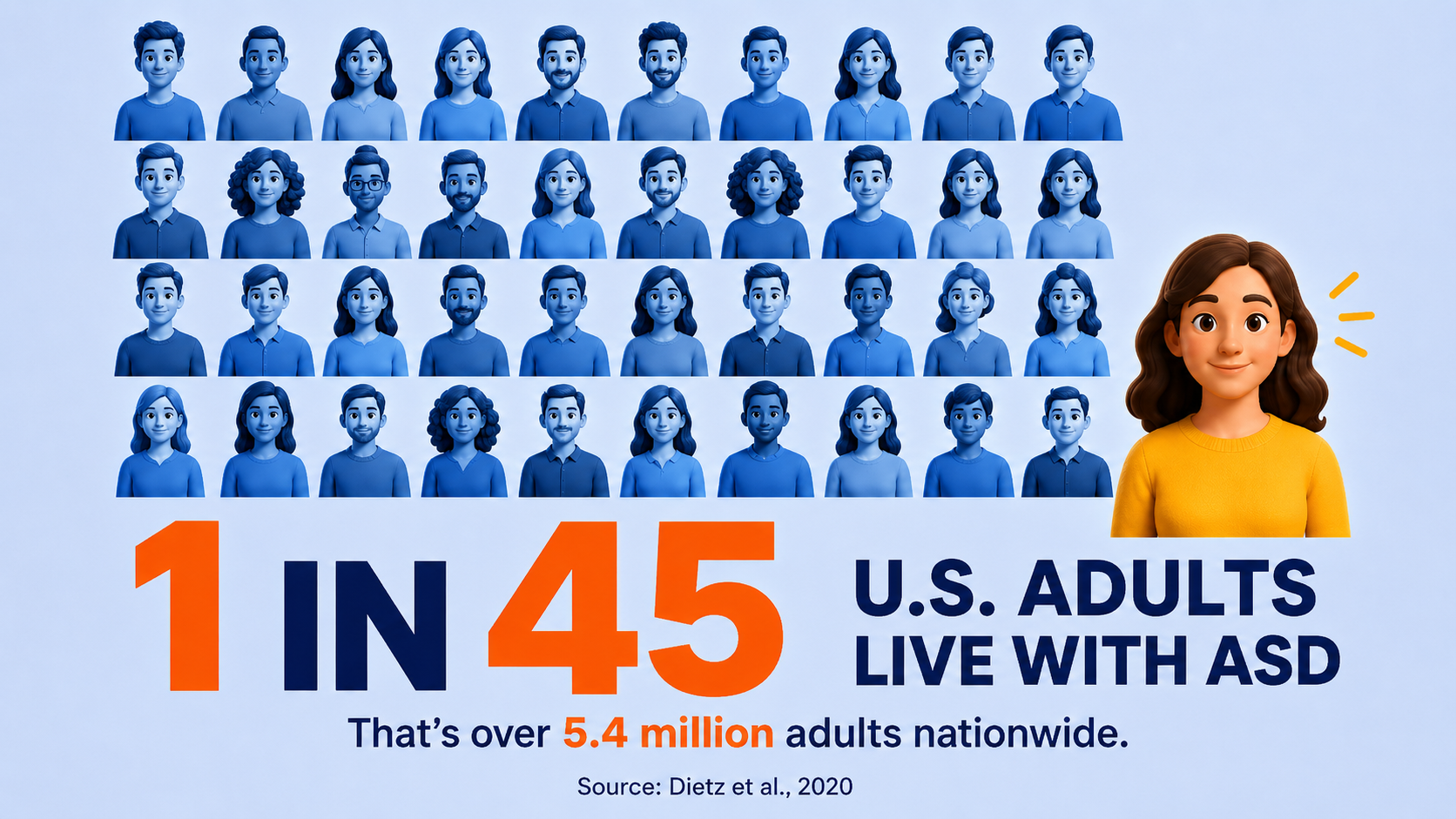
Source: Dietz et al., 2020. National and state estimates of adults with autism spectrum disorder.
The autism spectrum is broad. ASD can look different from one adult to another. The symptoms of autism may be hard to spot when a person has learned to get by for years.
Autism traits can give a name to parts of life that once felt confusing or hard to explain.
12 signs of autism that can show up in adulthood
These autism symptoms in adults can be easy to miss when they’ve been part of life for years. Use these 12 signs of autism to notice what feels familiar across school, work, home, or relationships.
Signs of autism in adults are not a diagnosis on their own. They are autism traits that can help you decide what to explore next.
1. Difficulty with social interactions and relationships
Many autistic adults want close ties. In my work, I often hear that the hard part is reading the social rules.
You might replay talks after they happen... why a joke fell flat, why someone pulled away, or why groups feel harder than one-on-one time.
In adult life, this might look like:
not knowing when to start or stop talking
upsetting someone without knowing why
missing hints in friendships or dating
preferring one-on-one time over groups
saying too much about a strong interest for the setting (like going deep on it during a brief work meeting)
These signs of autism in adults are often mistaken for disinterest. More often, the person cares but has to work harder to read others' expectations.
If this feels familiar, you may also want to read how adult autism evaluations differ for adults and children.
2. Challenges with nonverbal communication
Nonverbal communication is what people say without words. Tone, eye contact, facial expressions, and body language can all change the message.
For autistic adults, that extra layer can be hard to track while someone is still talking. They may understand the words but miss the look, pause, or tone that changes what the person means.
These autism symptoms in adults may look like:
missing sarcasm (when it depends on tone)
finding facial expressions hard to read
missing body language that shows someone is bored or ready to leave
standing too close or too far away without meaning to
making eye contact in a way others see as too little or too much
When I assess this, I’m not looking for one awkward moment. I’m looking for a long-term pattern where people misread what you mean, or you miss cues others expect you to catch.
3. Literal interpretation of language
People don’t always mean the exact words they say. “Touch base” means check in. “Read the room” means notice the mood. “It’s raining cats and dogs” means it’s raining hard.
If you’re on the autism spectrum, phrases like this can take extra work. You may hear the words clearly but still need time to work out the message. I ask about this in autism assessments because language can show how much effort daily talk takes.

Imagine a situation where you’re:
taking jokes or sarcasm at face value
asking for clear steps instead of hints
answering questions that were not meant for an answer
needing more time with idioms or double meanings
feeling worn out when phrases don’t mean what they say
When I ask about this, I’m listening for the extra step: hearing the phrase, checking what else it might mean, and trying to keep up while the talk moves on.
4. Repetitive behaviors or routines
Routines can make the day feel steadier. They lower the number of choices your brain has to sort through.
That’s one reason why routine matters in autism diagnosis. The CDC diagnostic criteria for ASD include restricted and repetitive behaviors, including strong routines, distress with small changes, and trouble shifting from one task or plan to another.
Common examples include:
taking the same route when a detour adds too many decisions
eating a familiar meal because it removes one choice from the day
following set steps before work or bed so the next action feels clear
These autism traits can become easier to notice when the pattern breaks. Your entire day can take more effort. A canceled plan may mean rebuilding the schedule in your head… missing the item you count on may make the next step harder to start.
Schedule changes can leave you working harder than people around you realize.
5. Intense focus on specific interests
Autism is often shown through big examples, like a child who plays piano by ear or knows every train schedule. In adults, a strong interest can look much quieter.
It may look like deep reading after work. It may show up in a job niche, a hobby, or one topic your mind keeps returning to.
A strong interest is not a problem by itself. The question is how much pull it has. If this focus has shaped school, work, friendships, or daily routines for years, online autism testing can help show if it fits a wider pattern.
Focused interests often show up in three ways:
Depth: you notice details other people miss
Time: hours pass before you notice
Pull: switching tasks feels hard
This autistic trait can bring comfort and skill. It can also push sleep, chores, or conversations to the side. In an adult assessment, the focus is on how the interest affects daily life.
6. Sensory sensitivities
A client may not call it sensory sensitivity at first. They may say the grocery store wears them out, their shirt fabric ruins their focus, or their body needs pressure to settle.
Adults on the autism spectrum can have sensory patterns in more than one direction. Hypersensitivity means input feels too strong. Hyposensitivity means input feels muted or harder to register. Both can be symptoms of autism.
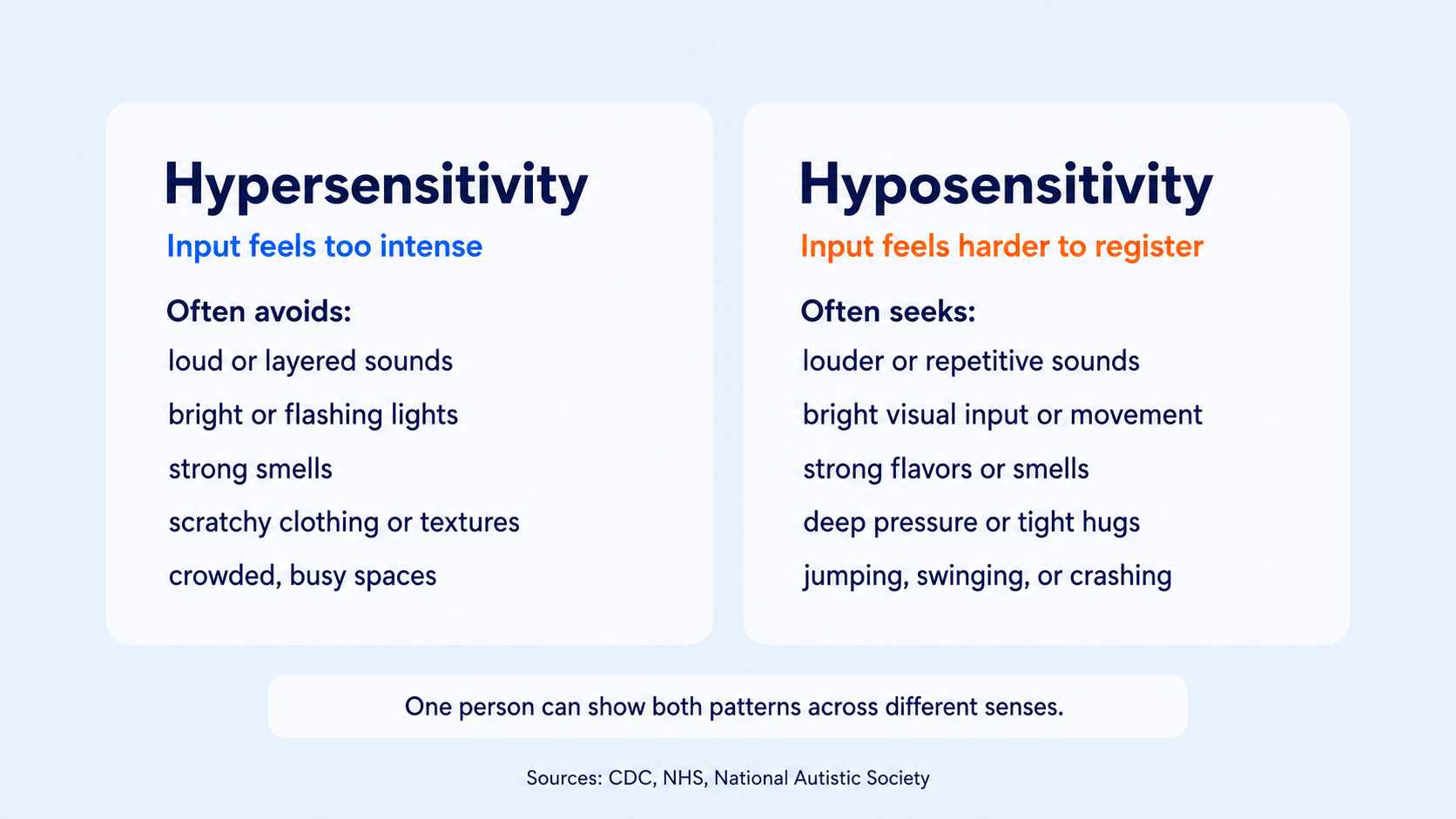
Sources: Centers for Disease Control and Prevention, 2024; National Autistic Society, 2026; National Health Service, 2026.
In my assessment and treatment services, I ask how this affects the day. Clothing, food, errands, work, sleep, and recovery time can all be shaped by sensory load.
7. Trouble with planning and staying organized
Adults on the autism spectrum may struggle with plans, time, and daily tasks. These skills are part of executive functioning.
Executive functioning helps you start tasks. It also helps you choose what comes first, follow steps, and track time.
When these skills take more effort, you may know what to do but still feel blocked.
You may notice this as:
starting tasks later than planned
breaking big tasks into steps
deciding what to do first
losing track of forms or deadlines
misjudging how long tasks will take
These challenges are not signs of laziness or low intelligence. They can appear with other autism symptoms in adults.
I’ve worked with capable adults who do well in many areas of life but still struggle with forms, calendars, deadlines, or daily tasks. That gap can feel confusing when other people expect those tasks to come easily.
8. Black and white thinking and gray areas
Black and white thinking means sorting things into clear boxes. Right or wrong. Fair or unfair. Safe or unsafe.
For adults on the autism spectrum, gray areas can take more effort… rules may feel clearer than exceptions… and choices can feel harder when there’s no obvious path.
During an adult autism diagnosis, I look for patterns over time. The focus is how rigid thinking, gray areas, and mixed signals affect daily life at school, work, home, or in relationships.
You may notice this when:
rules feel clear, but exceptions feel hard
unfairness feels hard to let go
mixed signals take extra time to sort
choices feel stressful without a clear answer
one bad moment changes how you see the whole situation
These autism traits are not the same as being difficult on purpose. The harder part may be sorting context and mixed information in the moment.
9. Strong emotional reactions
Strong emotional reactions can show up when feelings rise faster than the person can sort through them.
For autistic adults, emotions may feel sudden or hard to slow down once they start. Their reaction is NOT fake or done for attention. It’s because their brain may need more time to process what happened and settle again.
Think about:
feeling emotions hit all at once
reacting more strongly than others expect
going quiet when words feel out of reach
leaving the room before things get worse
Moreover, meltdowns and shutdowns can look different in adults:
Meltdowns may involve tears, panic, anger, or an urgent need to escape.
Shutdowns may look like silence, stillness, or being unable to respond.
Take note, though, that strong reactions are just one of many signs. They may matter when they appear with other autism symptoms, such as social stress, trouble with change, sensory sensitivity, or daily overwhelm.
10. Social exhaustion and need for alone time
Of the 12 signs of autism covered here, social exhaustion is one of the easiest to miss. A person may enjoy others and still feel wiped out afterward.
For autistic adults, being around people can take extra effort. Talking may also mean reading tone, knowing when to speak, and keeping up with the group.
The recovery need may show up as:
needing quiet after plans
feeling drained after a good visit
having less energy later in the day
choosing text over in-person plans
waiting before making new plans
Social exhaustion does not mean someone dislikes people. It means social time can cost more energy than others see. When that need is ignored, stress can build.
11. Feeling different and not belonging
Many people do not start by asking, “Am I autistic?” They start with a quieter question: “Why have I always felt different?”
For autistic adults, that feeling can follow them through school, work, friendships, and family life. A person may learn how to blend in, but still feel like they are copying rules other people just know.
Research on personal identity after an autism diagnosis shows that a later diagnosis can change how people see themselves.
It can show up as:
feeling out of place in groups
being called too sensitive, too direct, or too intense
changing how you act to seem easier to understand
wondering what’s wrong before finding another answer
Learning about adult autism can feel relieving. Years of stress and self-blame may start to fit into a clearer pattern.
I remember one client telling me:
“I kept thinking I was failing at things other people just knew how to do. Autism was the first explanation that didn’t make me feel broken.”
That question stays with me because it captures what a late diagnosis can bring up.
12. Masking or camouflaging
Masking (aka camouflaging) means hiding or changing autism traits to get through daily life.
This is the coping pattern I mentioned at the start of this guide, wherein a person may look calm, social, or capable while using a lot of energy to keep up.
Research on camouflage and masking behavior in adult autism describes camouflaging as trying to “disguise and compensate” for autism features in social settings.
Masking can look like:
rehearsing a work update before a meeting
planning answers before a phone call
copying how coworkers smile or use small talk
forcing eye contact during an appointment
laughing when others laugh (even if the joke wasn’t funny)
Masking can help someone get through the day. But the cost can build.
Over time, a person may feel drained, tense, or cut off from who they are. They may not know what they need because they have spent years acting the way others expect.
What should I do if I see signs of autism in myself?
Seeing yourself in our 12 signs of autism in adults can feel clear and confusing at once. You may recognize your social life, routines, senses, emotions, or masking.
As a psychologist, I don’t want you to self-diagnose from this article. I want you to write down what fits, when it started, and where it shows up in daily life.
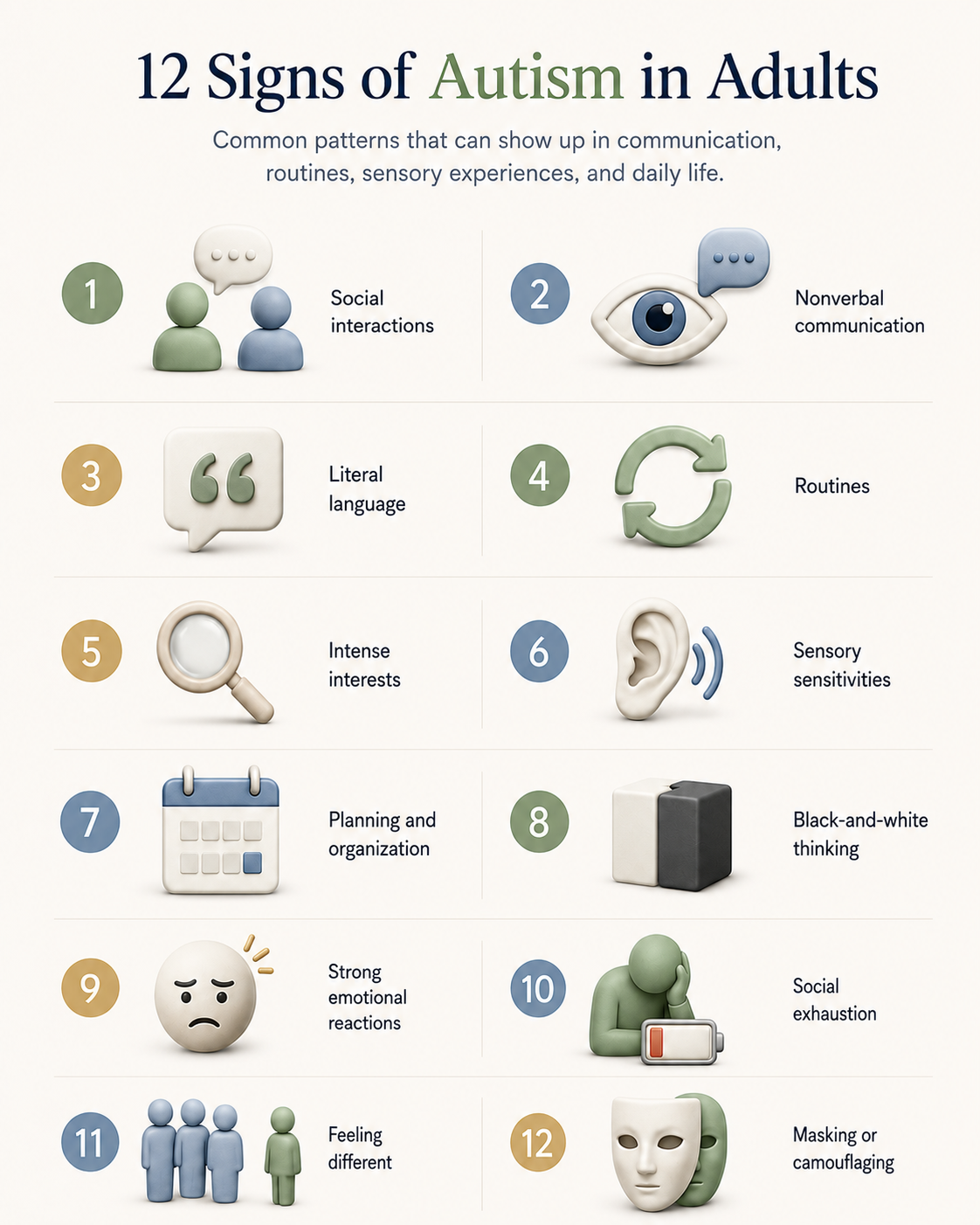
That context matters because autism can overlap with anxiety, ADHD, trauma, stress, burnout, and other concerns. A list can help you notice a pattern, but it can’t explain what’s driving it.
The next step is to look at the pattern across your life. Has it been there for years? Does it affect more than one area, like work, relationships, routines, sensory needs, or recovery after social time?
If the answer keeps pointing in the same direction, bring those examples into an autism evaluation.
When to seek professional help for autism
Reach out when the signs of autism in adults keep showing up in more than one part of your life. Work may take more out of you than it should. Relationships, routines, sensory needs, or social recovery may keep costing more energy than people see.
You don’t have to prove autism before asking for help. That’s what an autism evaluation is for. It looks at the full pattern, not just one score, one trait, or one hard season.
At Verdant Psychology, you can work with me, Dr. Matthew Miceli, through an online autism evaluation. Click the button below to schedule a free consultation, and we’ll talk through whether testing makes sense for you.